
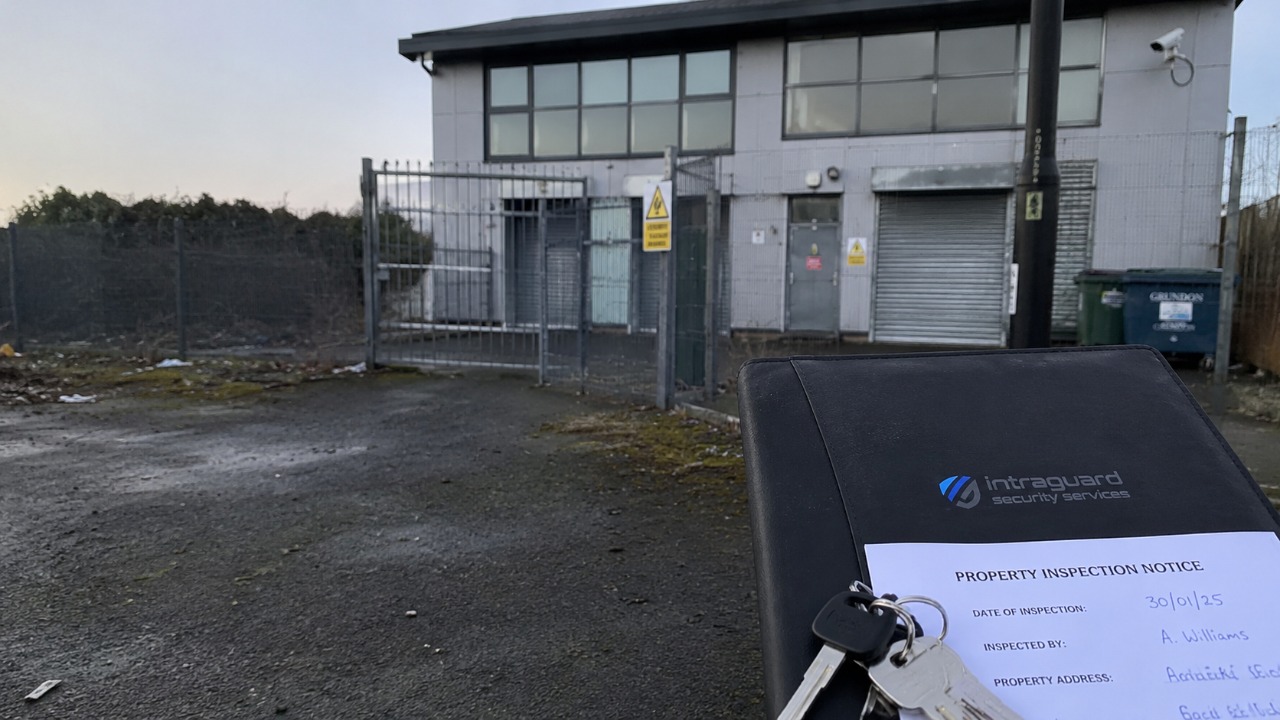
Vacant Property Management: A Complete Guide to Inspections, Risks and Protection
Vacant property management is the coordinated inspection, security, access control, maintenance escalation and reporting used to protect an unoccupied building.

The UK terror threat level tells businesses how likely a terrorist attack is, but it should not create panic. It should trigger practical action: review your security risks, brief your staff, check access control, test emergency plans, and make sure your site has the right level of protection.
As of 30 June 2026, the current UK threat level from terrorism is SEVERE, meaning an attack is considered highly likely. For business owners, venue managers, property teams, retailers, offices, warehouses, and event organisers, the message is clear: do not wait for an incident before reviewing your security.
Professional security services can help turn threat level awareness into real protection. That means trained officers, controlled access, mobile patrols, CCTV monitoring, alarm response, visitor management, and clear procedures that work when pressure rises.
The UK terror threat level shows how likely a terrorist attack is. When the level is SEVERE, businesses should stay calm, review site risks, brief staff, check access control, test emergency plans, review CCTV coverage, and make sure security support matches the level of public access, footfall, and operational risk.
The UK terror threat level is a national assessment of how likely a terrorist attack is. It does not predict a specific place, time, or target. It gives businesses a warning level so they can prepare properly.
For businesses, the key question is simple:
Are our people, premises, procedures, and security arrangements ready for the current level of risk?
The right response should be proportionate. A small office, retail store, warehouse, hotel, construction site, public venue, and event space all face different risks, so security planning should match the site, access level, and potential impact.
The UK uses five terrorism threat levels. Each level shows the assessed likelihood of an attack.
UK Threat Level | Meaning | What Businesses Should Do |
Low | An attack is highly unlikely | Keep normal security standards in place |
Moderate | An attack is possible, but not likely | Brief staff and review basic reporting routes |
Substantial | An attack is likely | Review risk assessments, site security, and response plans |
Severe | An attack is highly likely | Increase vigilance, check access control, brief staff, and review security cover |
Critical | An attack is highly likely in the near future | Follow official guidance and prepare for urgent operational changes |
The current UK threat level should never be treated as a one line news update. For businesses, it should become part of security planning, staff awareness, site management, and emergency readiness.
The current UK threat level is SEVERE, which means an attack is highly likely. That does not mean every business is a direct target, but it does mean businesses should take security seriously.
A higher threat level should lead to a calm review of:
Who can enter the premises
How visitors and contractors are checked
Whether front of house teams know what to report
Whether CCTV covers the right areas
How quickly alarms and incidents are escalated
Whether security officers have clear instructions
Whether staff understand evacuation or lockdown procedures
Whether busy entrances, queues, car parks, loading bays, and reception areas are properly managed
The goal is not to create fear. The goal is to reduce avoidable risk, improve response, and make the business harder to exploit.
Business Type | Main Exposure | What to Review First | Security Support to Consider |
Retail stores | Open access, staff safety, theft risk | Entrances, CCTV, staff reporting, peak hours | Retail security, CCTV monitoring, mobile patrols |
Offices | Visitors, contractors, reception access | Visitor logs, ID checks, front desk procedures | Front of house security, access control |
Warehouses | Loading bays, stock, perimeter access | Gates, deliveries, alarms, after hours response | Mobile patrols, key holding, alarm response |
Public venues | Crowds, queues, entrances, exits | Crowd flow, evacuation, communication routes | Event security, stewarding, crowd management |
Construction sites | Trespass, theft, vacant areas | Perimeter, access points, lighting, patrol logs | Manned guarding, patrols, vacant inspections |
Vacant properties | Delayed response, vandalism, unauthorised entry | Key control, alarms, patrol frequency | Key holding, alarm response, inspections |
Many businesses think terrorism threat levels only matter to airports, transport hubs, stadiums, government buildings, or major venues. That is a dangerous assumption.
The reality is that different types of premises can become vulnerable if security is weak, access is uncontrolled, staff are untrained, or procedures are unclear.
Businesses should pay attention if they manage:
Retail stores
Shopping areas
Offices with visitors
Warehouses and logistics sites
Construction sites
Hotels and hospitality venues
Schools, colleges, and training centres
Healthcare premises
Places of worship
Public venues
Event spaces
Residential blocks
Vacant properties
Car parks and delivery yards
Even if a business is not considered high risk, poor security control can still expose staff, visitors, assets, and operations to unnecessary danger.
When the UK threat level is SEVERE, businesses should focus on practical, proportionate security action.
Business Area | What to Check | Practical Action |
Access control | Who enters the site | Review staff IDs, visitor logs, contractor access, and delivery procedures |
Front of house | How visitors are received | Make reception checks calm, clear, and consistent |
CCTV | Whether key areas are visible | Check cameras, blind spots, recording quality, and monitoring arrangements |
Security officers | Whether duties match risk | Review guarding posts, patrol routes, escalation rules, and incident reporting |
Staff awareness | Whether staff know what to report | Brief teams on suspicious behaviour and reporting routes |
Emergency response | Whether people know what to do | Review evacuation, lockdown, shelter, and communication plans |
Events and crowds | Where people gather | Review queues, entrances, exits, screening, and stewarding |
Perimeter security | How the site is approached | Check gates, car parks, lighting, fencing, and loading bays |
Alarm response | How incidents are handled after hours | Review key holding, response times, and escalation contacts |
Cybersecurity awareness | Digital and staff risks | Remind staff about phishing, passwords, suspicious requests, and data safety |
This is where professional security services become valuable. A trained security provider can help turn a checklist into real site protection.
A higher UK threat level should not just lead to more concern. It should improve what actually happens on site.
Professional security services help businesses turn risk awareness into visible control, faster response, and clearer protection for staff, visitors, customers, and assets.
A trained security team can help by:
Controlling who enters the premises
Checking visitors, contractors, and deliveries
Monitoring entrances, exits, queues, and busy areas
Responding quickly to alarms or suspicious activity
Supporting evacuation, lockdown, or emergency procedures
Recording incidents clearly for management review
Reassuring staff and visitors with a calm security presence
Reducing pressure on untrained employees
The value is not just having guards on site. It is having trained people who know what to check, when to act, who to contact, and how to keep the situation controlled.
During a higher threat level, that can make the difference between a business that simply knows the risk and a business that is prepared to manage it.
A business security risk assessment should come before buying extra equipment or hiring cover blindly. Without an assessment, security decisions become guesswork.
A proper review should look at:
Who needs protection
What assets matter most
How people enter and leave
Where visitors, staff, or crowds gather
How deliveries and contractors are managed
Where CCTV coverage is weak
How alarms are handled
How staff report concerns
What happens during an emergency
Whether current security cover is enough
For example, a retail store may need visible guards, CCTV monitoring, staff protection, and loss prevention. A warehouse may need mobile patrols, gatehouse control, loading bay checks, and alarm response. A public venue may need event security, crowd management, search procedures, and emergency communication planning.
The best security plan is not the biggest one. It is the one that matches the real risks on the site.
Before you move on, check these basics:
Have you reviewed the current UK threat level?
Do staff know how to report suspicious activity?
Are entrances, exits, and delivery points controlled?
Is CCTV working and covering the right areas?
Are visitors, contractors, and deliveries checked properly?
Do you have a written emergency response plan?
Have staff been briefed on evacuation or lockdown procedures?
Are event or public venue risks reviewed before busy periods?
Do you have enough security cover for your site risk?
Is alarm response clear after hours?
Has your business security risk assessment been updated recently?
Do you know which security service your site actually needs?
If you cannot answer these confidently, your business may have avoidable security gaps.
NPSA guidance supports a risk based approach to protective security. For businesses, that means security should not be treated as a single camera, guard, gate, or alarm.
It should work as a system.
That system may include:
Leadership responsibility
Risk assessment
Physical security
Personnel security
Cybersecurity awareness
Access control
Staff training
Emergency response planning
Security culture
Regular review
A business with strong security culture is easier to protect because staff understand their role. They know what normal looks like, they notice when something feels wrong, and they report concerns quickly.
Public venue security needs special attention because venues involve visitors, crowds, queues, entrances, exits, and movement across different areas.
Venue managers should review:
Queue locations
Entry points
Exit routes
Bag policies where appropriate
Security officer positioning
Stewarding levels
Crowd flow
CCTV coverage
Staff radios and communication
Vehicle access near entrances
Emergency evacuation routes
Lockdown or shelter procedures
First aid access
Incident escalation routes
A visible security presence can also reassure visitors. Good security should feel calm, professional, and controlled, not aggressive or disruptive.
The event security threat level should be reviewed before every public facing event, corporate event, exhibition, festival, community gathering, or large private function.
Event organisers should ask:
How many people are expected?
Will queues form outside?
Are entrances clearly controlled?
Is there a plan for rejected entry?
Are emergency exits clear?
Can security staff communicate quickly?
Is CCTV being monitored?
Are bag checks or screening needed?
Are staff briefed before doors open?
Is there a clear incident command structure?
What happens if the threat level changes before the event?
Professional event security helps manage people, pressure, access, and response. That matters more when the national threat level is elevated.
Staff security awareness training is one of the most useful steps a business can take. Employees do not need to become security officers, but they do need to know what to report and who to contact.
Training should cover:
How to report suspicious behaviour
How to handle unattended items safely
How to follow visitor procedures
How to respond to alarm activations
How to protect customers and visitors
How to avoid making unsafe assumptions
How to follow evacuation or lockdown instructions
How to communicate during an incident
Frontline staff are often the first people to notice something unusual. If they are not trained, warning signs may be missed.
Cybersecurity awareness belongs in wider protective security planning because physical and digital risks often overlap.
A business may face phishing emails, false instructions, stolen login details, exposed access information, or disruption to communications. During a serious incident, poor digital habits can make confusion worse.
Businesses should remind staff to:
Avoid suspicious links
Report unusual emails
Protect passwords
Use approved communication channels
Check unexpected requests
Avoid sharing internal security information publicly
Report lost passes, keys, devices, or credentials
Good security protects people, premises, systems, and information together.
Martyn’s Law, officially the Terrorism Protection of Premises Act 2025, is designed to improve public protection at certain premises and events. Although there is an implementation period before the main duties come into force, businesses and venues should not wait until the final deadline to prepare.
For a deeper breakdown of who may be affected and what steps organisations should take, read Intraguard’s full guide on Martyn’s Law explained for UK businesses and venues.
For public facing premises and event organisers, this is another reason to review:
Risk assessments
Staff training
Security procedures
Emergency plans
Visitor management
Event security
Evacuation and lockdown processes
Protective security responsibilities
Even where a business is unsure whether it will fall in scope, preparing early is still sensible. Strong security planning protects people and reduces operational risk.
Professional security services can support wider preparedness, but businesses should always check official Martyn’s Law guidance to understand their legal duties. Hiring a private security provider is not automatically required for compliance.
A threat level is only useful if it changes what happens on site. Businesses should turn the national threat level into a simple action plan that staff and security teams can follow.
That plan should answer:
Who is responsible for security decisions?
Who checks entrances, exits, and visitor access?
Who briefs staff when the threat level changes?
Who reviews CCTV, alarms, and patrol coverage?
Who contacts emergency services or security providers?
What changes during busy periods, events, or late night operations?
What happens if staff report suspicious behaviour?
This is where many businesses fall short. They know the threat level, but they do not turn it into clear roles, checks, and response procedures.
A business should consider professional security support if:
Staff are unsure how to respond to security concerns
Visitors or contractors are not properly controlled
CCTV is present but not actively monitored
Alarm response is slow or unclear
The site has public access
The business operates late at night
There are valuable assets on site
The premises are vacant or partly occupied
Events or crowds are expected
Security duties are being handled by untrained staff
Current cover feels too light for the risk level
If any of these apply, it is worth reviewing your security arrangements before a problem forces the decision.
Business Type | Common Security Risk | Useful Security Support |
Retail stores | Theft, staff abuse, open access | Retail security, CCTV monitoring, access control |
Offices | Visitor access, staff safety, reception control | Front of house security, manned guarding, visitor management |
Warehouses | Loading bays, stock loss, perimeter access | Mobile patrols, gatehouse security, CCTV, alarm response |
Construction sites | Trespass, theft, vacant areas | Manned guarding, mobile patrols, vacant property inspections |
Events | Crowds, queues, entry control | Event security, crowd management, access control |
Public venues | High footfall, emergency response | Security officers, stewarding, CCTV monitoring, incident planning |
Vacant properties | Trespass, vandalism, delayed response | Key holding, alarm response, patrols, inspections |
Multi site businesses | Inconsistent procedures | Managed security cover and standardised reporting |
If the current UK threat level has made you question whether your site is properly protected, now is the time to review your security arrangements.
Intraguard can help assess your risks, strengthen your site procedures, and provide professional security services matched to your business environment.
Whether you need manned guarding, mobile patrols, event security, CCTV monitoring, alarm response, key holding, access control support, or a tailored site security plan, Intraguard can help you put practical protection in place.
Contact Intraguard today to discuss security cover for your business, venue, property, or event.
The UK terror threat level is not there to create panic. It is there to help businesses understand the likelihood of an attack and prepare properly.
For businesses, the right response is practical: review risk assessments, brief staff, strengthen access control, check emergency plans, improve reporting procedures, and make sure security cover matches the environment.
A camera, alarm, or policy document is not always enough on its own. Businesses need security measures that work in real situations, with trained people, clear procedures, and reliable response.
Intraguard helps businesses turn security awareness into practical protection through professional guarding, patrols, CCTV monitoring, event security, alarm response, key holding, and tailored security services across the UK.
As of 29 June 2026, the current UK national threat level from terrorism is SEVERE, meaning an attack is considered highly likely.
The UK terror threat level shows the assessed likelihood of a terrorist attack. It does not predict a specific place, time, or target.
A severe threat level in the UK means a terrorist attack is highly likely. Businesses should increase vigilance and review security procedures.
Businesses should review risk assessments, brief staff, check access control, test emergency plans, review CCTV, and strengthen reporting procedures.
Yes. Small businesses should assess terrorism risk if they have staff, visitors, public access, valuable assets, events, or premises that could be affected by disruption.
ProtectUK guidance provides official counter terrorism and protective security advice to help organisations improve preparedness.
Yes. Trained security officers can support access control, visitor management, patrols, CCTV monitoring, incident reporting, crowd management, and emergency response.
A business should consider security services when access is uncontrolled, staff feel exposed, CCTV is not monitored, events are planned, assets are at risk, or current procedures feel weak.
Vacant property management is the coordinated inspection, security, access control, maintenance escalation and reporting used to protect an unoccupied building.
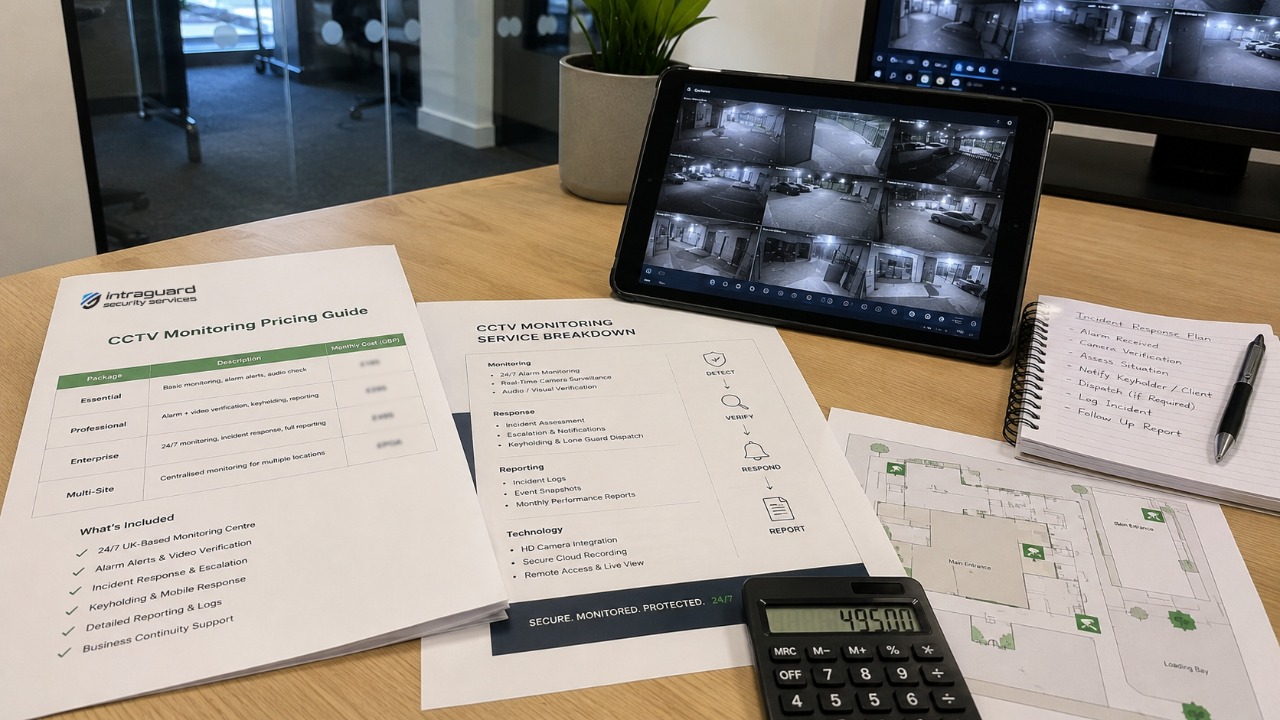
CCTV monitoring is worth the price when it changes the outcome of an incident. Recording only CCTV may give your business evidence the next morning.
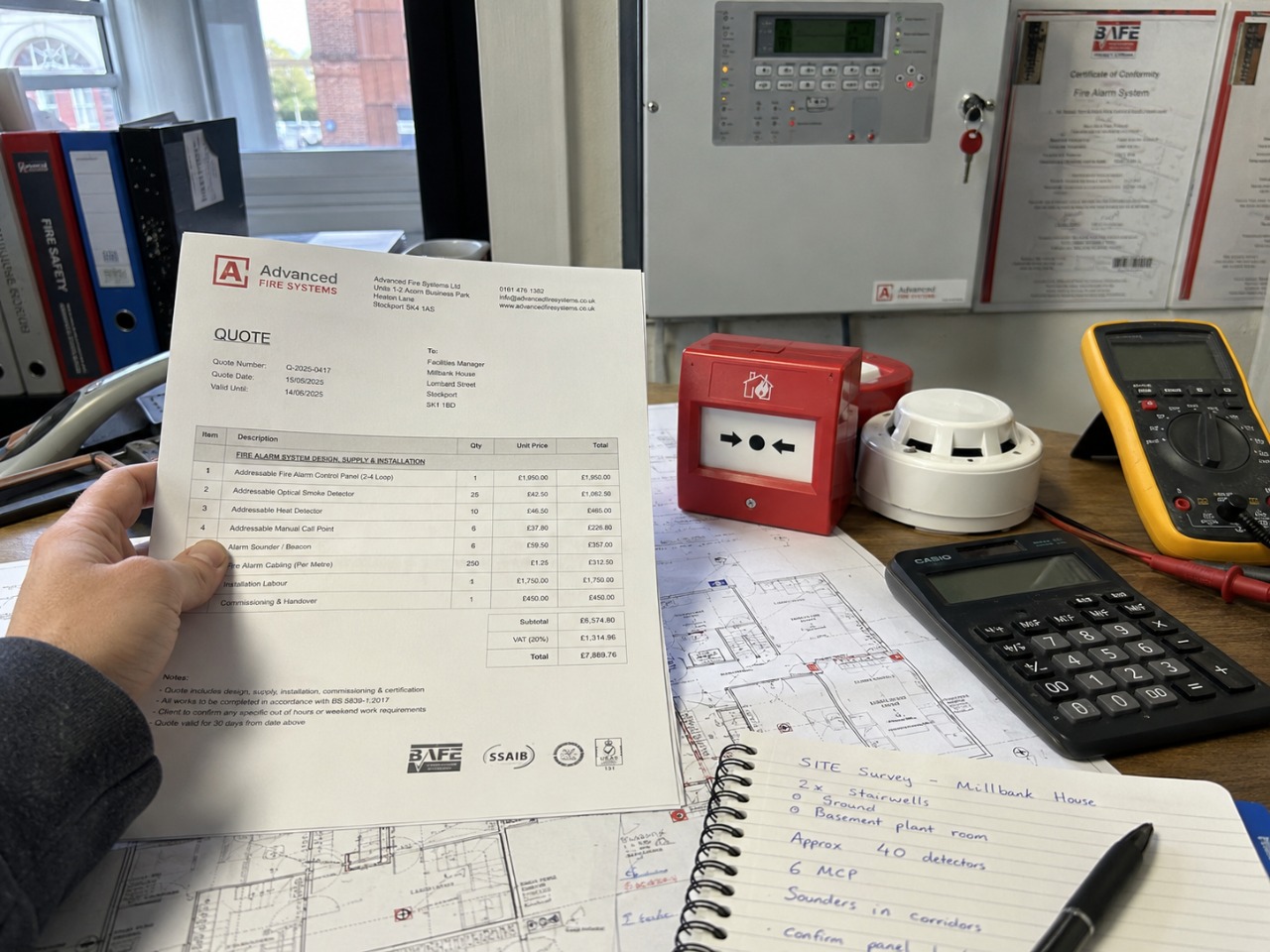
Fire alarm installation prices UK guide for commercial premises. See typical costs, quote factors, hidden fees and what to check before choosing an installer.
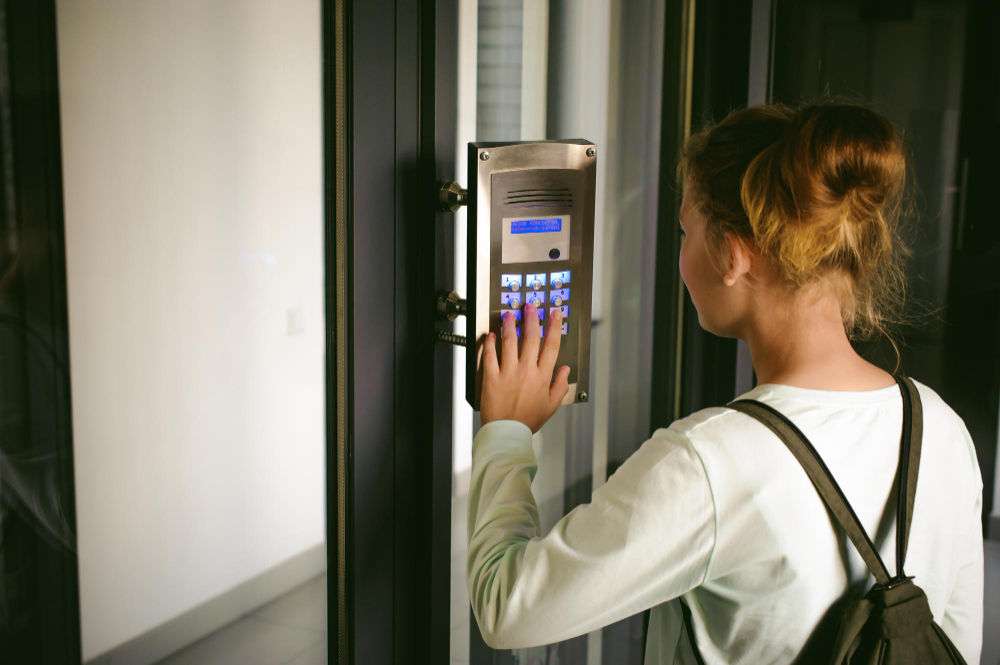
Access control systems prevent unauthorised entry by checking a person’s credentials before allowing access. These credentials may include a key card, fob, PIN, mobile credential, biometric scan, or visitor approval.
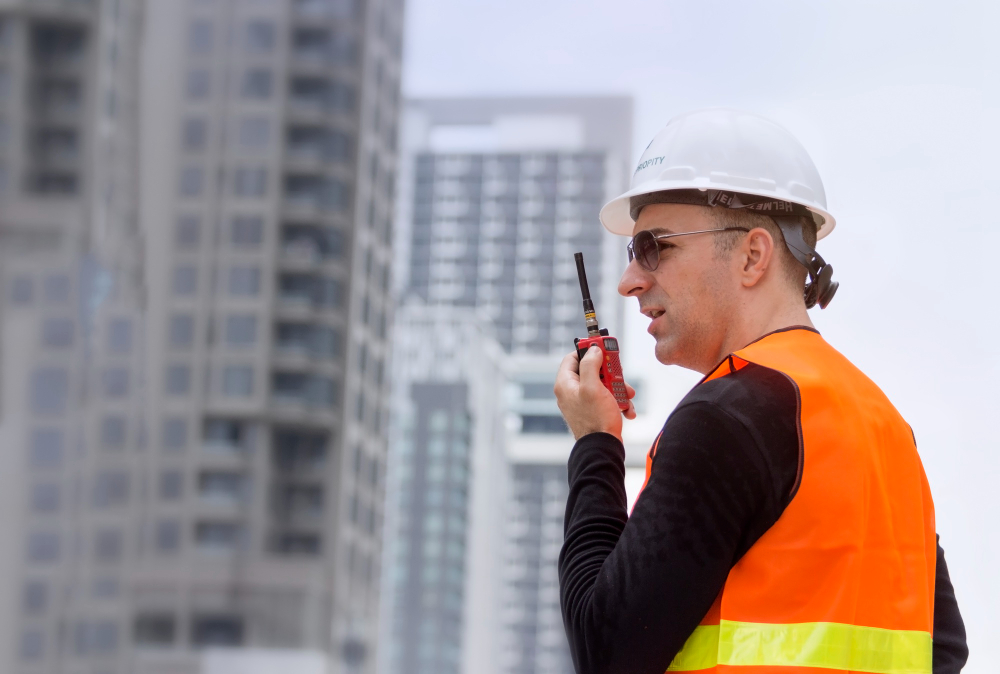
A small refurbishment site may only need patrols or CCTV monitoring. In contrast, a busy London construction project with tools, plant machinery, fuel, scaffolding and materials may need manned guarding or 24/7 cover.

For UK businesses, the key questions are simple: does Martyn’s Law apply, which tier are you in, what procedures do you need, and how do security measures like CCTV, access control, guards, lockdown plans, and evacuation routes fit in?