
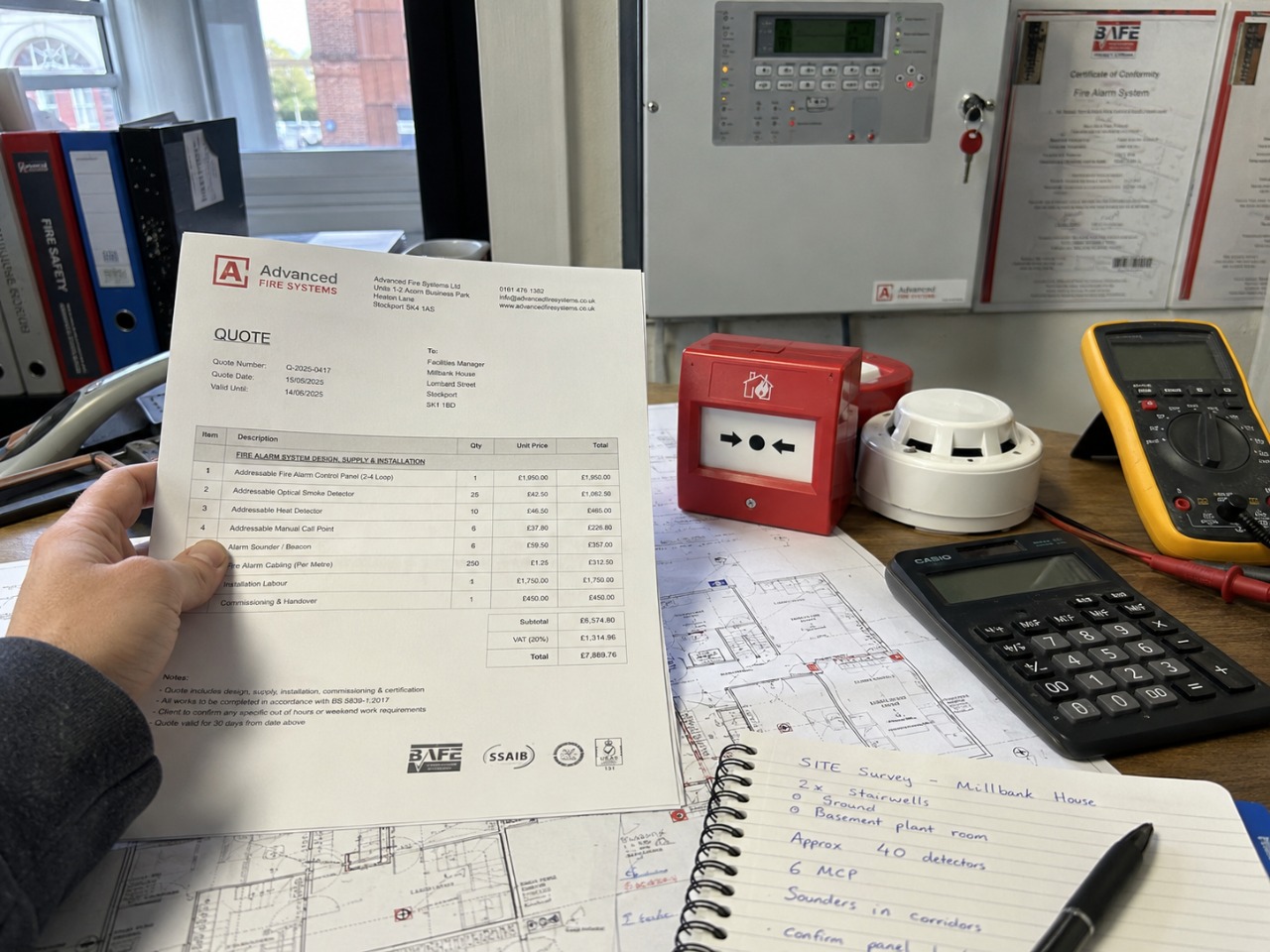
Fire Alarm Installation Prices UK: What Affects Your Quote?
Fire alarm installation prices UK guide for commercial premises. See typical costs, quote factors, hidden fees and what to check before choosing an installer.
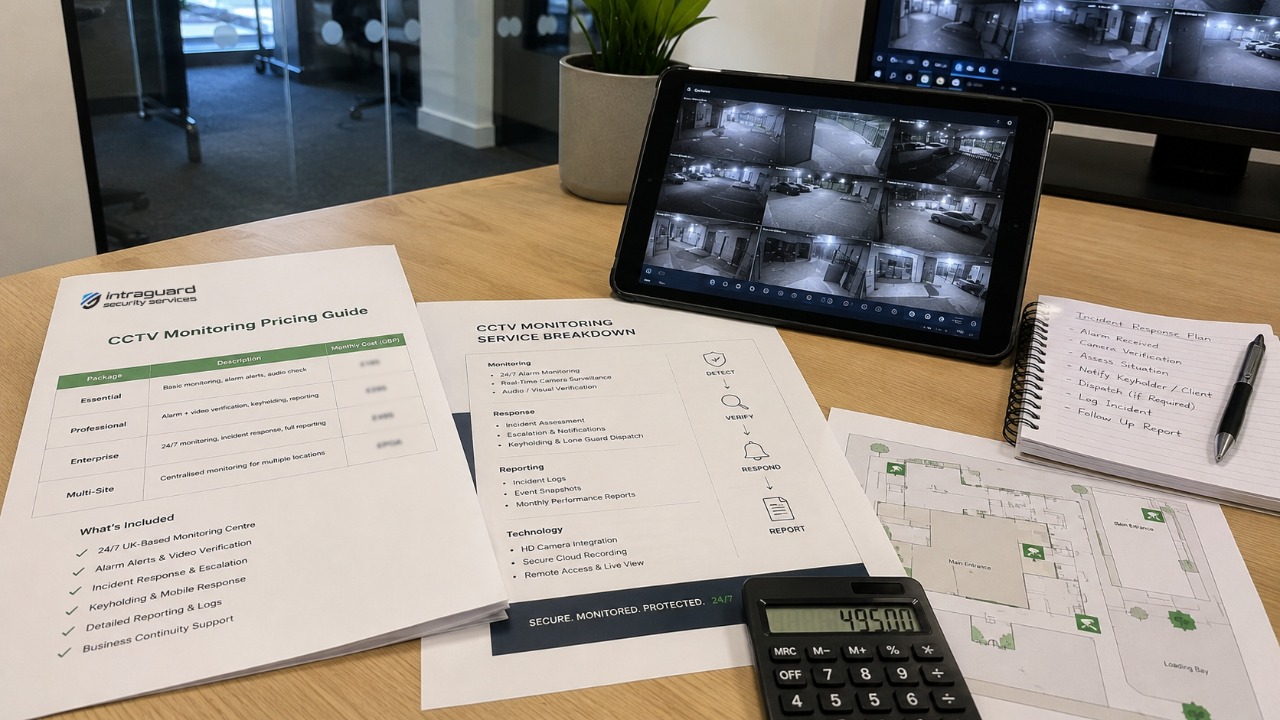
If your cameras only record footage, your business may still be exposed when the site is closed, unstaffed or spread across multiple access points. CCTV footage can help show what happened after an incident. Monitored CCTV is more useful when it helps verify a real alert and triggers an agreed response before costs grow.
For UK businesses, CCTV monitoring costs should be judged against risk, not only the monthly fee. A small office, a retail store, a warehouse yard and a vacant property do not need the same level of monitoring. The right setup depends on what is being protected, when the site is most exposed and who is expected to act after a confirmed alert.
CCTV monitoring for UK businesses commonly ranges from around £10 to £30 per month for basic alert monitoring, £25 to £50 per month for professional monitoring support, and £40 to £200+ per month for commercial remote CCTV monitoring packages. Larger, higher-risk or 24/7 monitoring plans are usually quote-based.
These are planning ranges, not fixed prices. A reliable quote should be based on your number of monitored cameras, monitoring hours, existing CCTV condition, site risk level, alarm links, escalation route, reporting needs and whether physical response services are included.
CCTV monitoring option | Typical monthly planning range | Best for | Commercial caution |
Cloud storage only | £5 to £20 | Low-risk sites that mainly need footage backup | This is not the same as monitored response. |
Basic CCTV alert monitoring | £10 to £30 | Smaller premises with simple out-of-hours alert needs | Check whether alerts are reviewed or only forwarded. |
Professional CCTV monitoring support | £25 to £50 | Small commercial premises needing alert review and escalation | Confirm what happens after an alert is verified. |
Commercial remote CCTV monitoring | £40 to £200+ | Offices, retail sites, warehouses, yards and construction sites | Cost depends heavily on risk, cameras and hours. |
24/7 remote CCTV monitoring | Quote-based | Higher-risk sites, larger estates and critical out-of-hours risk | Not every business needs 24/7 cover. |
Monitoring with key holding, alarm response or patrols | Quote-based | Sites that need physical attendance after verified alerts | Callout fees and attendance rules must be written clearly. |
CCTV monitoring is worth the price when it changes the outcome of an incident. Recording-only CCTV may give your business evidence the next morning. Monitored CCTV can help identify a real alert sooner and move it into an agreed escalation process.
The cost case becomes clearer when you compare the monthly fee with the potential costs of a break-in, stock loss, vandalism, emergency repair, or operational shutdown. The objective is not to buy more cameras for their own sake. The objective is to reduce the chance of a costly incident being missed.
A monitoring package is less valuable if it only stores clips, sends vague notifications, or leaves your staff to decide what to do at 2 am. The stronger question is: what happens after the alert?
A CCTV monitoring fee can include several different service elements. Some packages are simple alert forwarding. Others include event-triggered review, escalation instructions, incident reporting and links to response services.
A commercial CCTV monitoring quote may include:
Monitoring hours, such as overnight, weekend, bank holiday or 24/7 cover
Number of monitored cameras or alert zones
Event-triggered review or scheduled monitoring checks
Alert filtering to reduce unnecessary callouts where the system allows it
Keyholder notification rules
Alarm response, key holding or mobile patrol escalation where included
Incident reporting and evidence support
Basic system health checks, depending on the package
Setup, connection or maintenance charges
Callout fees or attendance charges if physical response is required
Not every provider includes every item. Audio challenge, direct police response pathways and specialist accreditation requirements should never be assumed. They should only be treated as included if they are written into the quote and genuinely available for your site.
CCTV installation is usually a separate upfront cost from monthly CCTV monitoring. Installation covers the cameras, recorder or storage setup, cabling, configuration, testing, signage considerations and any monitoring connection work. Monitoring is the ongoing service that deals with alerts, checks and escalation.
If your business already has CCTV, you may not need a full replacement. The key question is whether your current system has the camera coverage, image quality, lighting, network connection and alert setup needed for effective monitoring.
Cost type | What it usually covers | Payment type |
CCTV installation | Cameras, recorder, cabling, setup and testing | One-off cost |
CCTV monitoring | Alert monitoring, review and escalation process | Monthly cost |
Cloud storage | Online footage storage and remote playback | Monthly add-on |
Maintenance | Camera checks, faults, cleaning and updates | Monthly or annual plan |
Response services | Key holding, alarm response or mobile patrol attendance | Monthly, callout-based or quote-based |
For new or upgraded systems, Intraguard can support commercial CCTV installation through its in-house security systems team. Intraguard has confirmed that security systems installers are CTC cleared, which is relevant for businesses that need higher confidence in the people working on site.
The biggest cost factors are camera numbers, monitoring hours, site risk and response requirements. Price should reflect what your site actually needs, not a generic bundle.
More cameras usually mean more alert zones, more views to review and more complexity. However, camera count alone can be misleading. Six cameras covering real entry points, gates, loading areas and blind spots may be more useful than twenty poorly placed cameras.
Many businesses only need monitoring when the site is closed, such as overnight, weekends, bank holidays or during seasonal shutdowns. Scheduled monitoring can reduce cost if risk is mainly out of hours. 24/7 monitoring costs more because the monitoring window is wider.
Retail stores, warehouses, construction sites, logistics yards and vacant premises often need more detailed monitoring because they carry higher risk of theft, trespass, vandalism, arson, unauthorised access or business disruption.
Monitoring is only as strong as the system it relies on. Poor lighting, weak camera angles, unreliable internet, low image quality or false-motion triggers can increase cost and reduce performance. A site review should identify whether the system is monitoring-ready.
CCTV monitoring becomes more useful when it works with alarm monitoring. An alarm tells you something has triggered. Camera views and alert information can help decide whether the event needs escalation. This can reduce unnecessary callouts when false activations are caused by weather, animals, shadows, staff error or poor sensor placement.
A monitoring plan is stronger when it is connected to a clear response route. For some businesses, that route may be a keyholder. For higher-risk commercial sites, it may include key holding, alarm response or mobile patrol attendance. These services usually increase the monthly or callout cost, but they can make the monitoring setup more useful.
Business type | Likely cost level | Why the price changes |
Small office | Lower | Fewer cameras, limited public access and mainly out-of-hours risk. |
Retail store | Medium | Shoplifting risk, closing-time risk, staff safety and high footfall. |
Warehouse | Medium to high | Stock value, loading bays, vehicle movement and yard access. |
Construction site | Higher | Tools, plant, fuel, temporary access and exposed perimeters. |
Vacant property | Medium to high | Trespass, vandalism, arson risk and hidden damage. |
Logistics yard | Medium to high | Vehicles, trailers, gates, fuel and out-of-hours movement. |
Large commercial building | Higher | Multiple entrances, car parks, visitors, staff areas and wider operating hours. |
The right quote is based on risk. A low-risk office may only need scheduled monitoring. A warehouse, yard or vacant property may need monitoring plus a response plan that includes key holding, alarm response, patrol attendance or vacant property inspections.
No. 24/7 CCTV monitoring is not automatically the best value for every commercial site. A better question is when your site is most exposed.
A retail store may need cover after closing and before opening.
A warehouse may need overnight and weekend monitoring.
A construction site may need monitoring when tools, plant and materials are left unattended.
A vacant property may need stronger monitoring because nobody is on site daily.
A logistics yard may need cover overnight when vehicles and trailers are parked.
If risk is concentrated outside trading hours, scheduled monitoring can control cost without leaving the site exposed during its highest-risk periods.
CCTV monitoring usually costs less than full-time manned guarding because it can support multiple camera views without placing an officer on site for every hour. However, it does not replace security guards in every situation.
Security officers are stronger when a site needs visible deterrence, access control, visitor checks, staff support, patrols, front-of-house duties or direct public interaction. CCTV monitoring is stronger when the main requirement is out-of-hours visibility, alert handling and escalation.
Site need | Cost-conscious option | Stronger option |
Overnight warehouse protection | CCTV monitoring | CCTV monitoring with mobile patrols |
Retail theft pressure | CCTV monitoring for alerts | CCTV monitoring with retail security officers |
Vacant property risk | Remote CCTV monitoring | Monitoring with inspections and key holding |
Construction site security | Monitored CCTV | Monitored CCTV with patrol response |
Commercial reception or public access | CCTV with access control | CCTV, access control and manned guarding |
For many businesses, the best value is blended security. Use CCTV monitoring for visibility and alert escalation, then add officers, patrols or key holding only where physical presence is genuinely needed.
Recording-only CCTV gives your business footage after the event. Monitored CCTV gives your business a route to act while the event is developing.
If someone enters a yard at 2am, recorded footage may help show what happened the next morning. With a monitored setup, the alert can be assessed according to the system and escalated through the agreed response process. That difference is what the monthly monitoring fee is meant to pay for.
Recording helps with evidence. Monitoring helps with faster decision-making and response planning.
CCTV monitoring is most useful when it is connected to a clear action plan. A camera alert without a response route can still leave a business exposed.
A practical escalation process may look like this:
1. An alert is received from the monitored system.
2. The event is checked according to the agreed monitoring setup.
3. False activations are filtered where possible.
4. A keyholder is contacted if required.
5. Alarm response or mobile patrol attendance is requested if included in the plan.
6. An incident report is created for the business.
Intraguard operates its own dedicated Alarm Receiving Centre in Stanmore, UK, with 24/7 monitoring for system alerts. Its response planning can be linked with commercial alarm response, key holding and mobile patrols where these are included in the agreed package.
The important point is transparency. Before comparing price, ask whether the service is live, event-triggered, scheduled or alert-based, and what happens after a confirmed alert.
UK businesses still face serious property, theft and staff safety pressures. The Office for National Statistics reported 509,566 shoplifting offences in England and Wales in the year ending December 2025, following recent rises in shoplifting.
The British Retail Consortium reported 5.5 million detected incidents of shop theft last year. It also reported 1,600 daily incidents of violence and abuse against retail workers, and said retailers had spent over £5 billion in the previous five years on improved security measures.
These figures do not mean every business needs the most expensive monitoring plan. They do show why monitoring should be planned around the cost of a real incident, not just the cheapest monthly line item.
CCTV monitoring also needs to be planned responsibly. GOV.UK guidance says businesses using CCTV must usually tell people they may be recorded by displaying clear, readable signs, control who can see recordings and use the system only for its intended purpose. Businesses may also need to register with the ICO and pay a data protection fee unless exempt.
The ICO video surveillance guidance is the right source for detailed UK data protection guidance on CCTV, video surveillance and related technologies.
A monitoring provider should be able to explain who can access footage, what is reviewed, how incidents are reported and how your business should handle signage and footage requests.
SIA licensing may be required when CCTV is used to guard premises, property, or people. GOV.UK guidance says a CCTV licence is required where CCTV equipment is used to watch members of the public or identify people, and to guard against disorder or protect people from assault in the relevant circumstances.
This is why a CCTV monitoring quote should not be judged only on price. It should also explain who handles the monitoring, what licence position applies and how escalation is managed.
When a monitoring plan includes physical response through security officers, Intraguard uses SIA-licensed officers. Intraguard also works with BS 7858 staff vetting for manpower-based services, and BS 7984 applies to key holding and alarm response support.
A clear CCTV monitoring quote should make it easy to compare value. A vague monthly fee can hide gaps that only become obvious after an incident.
Number of monitored cameras or alert zones
Monitoring hours and days
Whether the monitoring is live, event-triggered, scheduled or alert-based
Monthly monitoring fee
Setup, connection or maintenance charges
What happens after an alert
Keyholder notification process
Alarm response, mobile patrol or key holding options
Any callout fees or attendance charges
Incident reporting and evidence support
Data protection and signage responsibilities
What is not included
The quote should also say whether your existing CCTV system is suitable or whether cameras, coverage, lighting, broadband, signage or recording settings need improvement first.
A low price is not automatically good value. Watch for these warning signs before signing a monitoring agreement:
No written response process after an alert.
No clarity on whether alerts are reviewed or simply passed on.
No stated monitoring hours.
No explanation of callout charges.
No data protection or signage guidance.
No clarity on who is responsible for system faults.
Promises of police response without explaining eligibility, site requirements and process.
No option to connect monitoring with key holding, alarm response or patrols when your risk level needs physical attendance.
The cheapest package can become expensive if no one knows what to do when a real alert occurs.
Before comparing prices, ask three practical questions:
1. What would one serious incident cost the business?
2. How quickly would the right person know if an alert happened tonight?
3. Who can attend or act if the alert is verified?
If you cannot answer those questions clearly, the monitoring plan is not ready. The price may look attractive, but the operational gap remains.
Intraguard can review your commercial premises, existing CCTV setup, opening hours, site risk and response requirements before recommending a monitoring route. The aim is to avoid unnecessary monthly cost while making sure a verified alert has a practical escalation path.
Depending on the risk profile, a CCTV monitoring plan can be considered alongside commercial CCTV installation, remote monitoring, alarm response, key holding, mobile patrols, manned guarding, access control or vacant property inspections.
For a commercial CCTV monitoring quote, speak with Intraguard on 0333 888 0247 or request a quote through the website.
CCTV monitoring costs should be judged against the cost of poor response, not only the monthly fee. Theft, vandalism, false alarms, delayed action, emergency repairs and operational downtime can all cost more than a properly planned monitoring setup.
For UK businesses in 2026, CCTV monitoring is worth the price when it improves alert visibility, supports faster decision-making and connects the site to a clear response plan. It is weaker when it only stores footage and leaves the business to discover the issue later.
The best quote is the one that explains the risk, the monitoring window, the system requirements, the escalation route and the real cost of attendance before an incident happens.
For UK businesses, CCTV monitoring typically ranges from £10 to £30 per month for basic alert monitoring, £25 to £50 for professional monitoring support, and £40 to £200+ for wider commercial packages. Larger or higher-risk sites are usually quoted individually.
Yes, when it helps verify alerts faster and connects your site to a clear escalation route. It is most valuable for businesses with out-of-hours risk, valuable stock, vacant premises, exposed yards, multiple access points or previous incidents.
Not always. CCTV monitoring is usually cheaper than full-time guarding and is useful for alert visibility and escalation. Security guards are still better where a site needs physical presence, access control, patrols, visitor checks or public-facing support.
The main cost factors are the number of monitored cameras, monitoring hours, site risk, existing CCTV quality, alarm integration, reporting needs and whether key holding, alarm response or mobile patrol attendance is included.
Only if your risk justifies it. Many businesses only need monitoring outside trading hours, overnight, at weekends or during shutdown periods. A site risk review should identify the most exposed times before you commit to a wider package.
Often yes, but it depends on camera placement, image quality, lighting, broadband, recording setup and alert configuration. A monitoring review should confirm whether your current system is suitable or needs improvement first.
Yes. This is often the stronger commercial setup. CCTV monitoring can support alert assessment, while alarm response, key holding, or mobile patrols can provide the business with a physical response route when included in the agreed plan.
Ask what type of monitoring is included, what happens after an alert, who is contacted, whether attendance is available, what callout fees apply, what data protection support is offered and what is not included in the price.
Fire alarm installation prices UK guide for commercial premises. See typical costs, quote factors, hidden fees and what to check before choosing an installer.
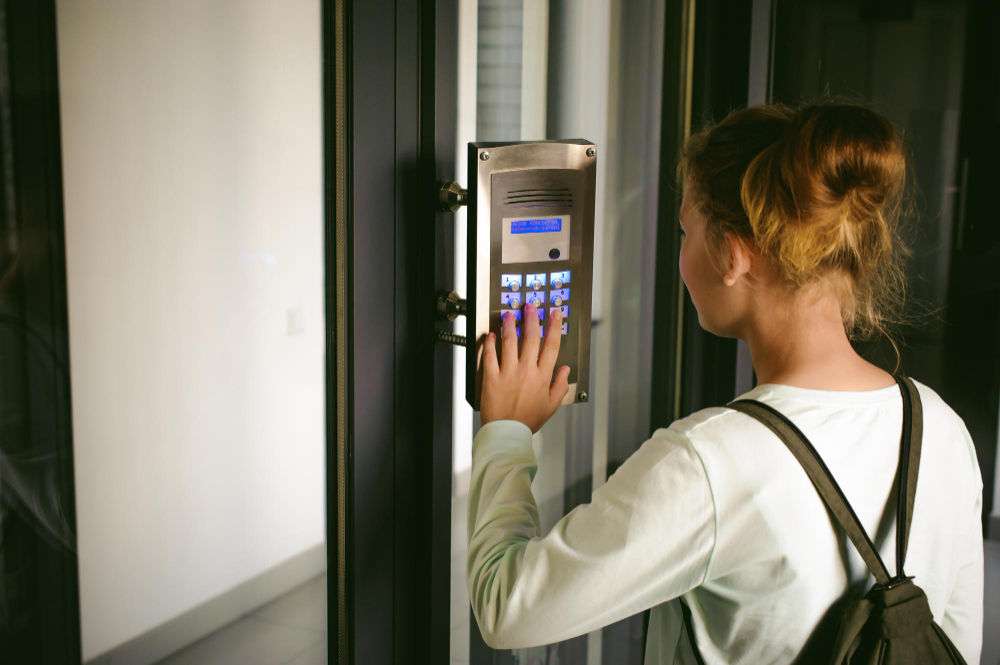
Access control systems prevent unauthorised entry by checking a person’s credentials before allowing access. These credentials may include a key card, fob, PIN, mobile credential, biometric scan, or visitor approval.

The UK terror threat level is a national assessment of how likely a terrorist attack is. It does not predict a specific place, time, or target. It gives businesses a warning level so they can prepare properly.
A small refurbishment site may only need patrols or CCTV monitoring. In contrast, a busy London construction project with tools, plant machinery, fuel, scaffolding and materials may need manned guarding or 24/7 cover.

For UK businesses, the key questions are simple: does Martyn’s Law apply, which tier are you in, what procedures do you need, and how do security measures like CCTV, access control, guards, lockdown plans, and evacuation routes fit in?

To put it simply, workforce management systems are digital tools that help businesses plan, schedule, track, and optimise their workforce. Instead of managing people manually, these systems automate key tasks like scheduling, attendance, and workforc