
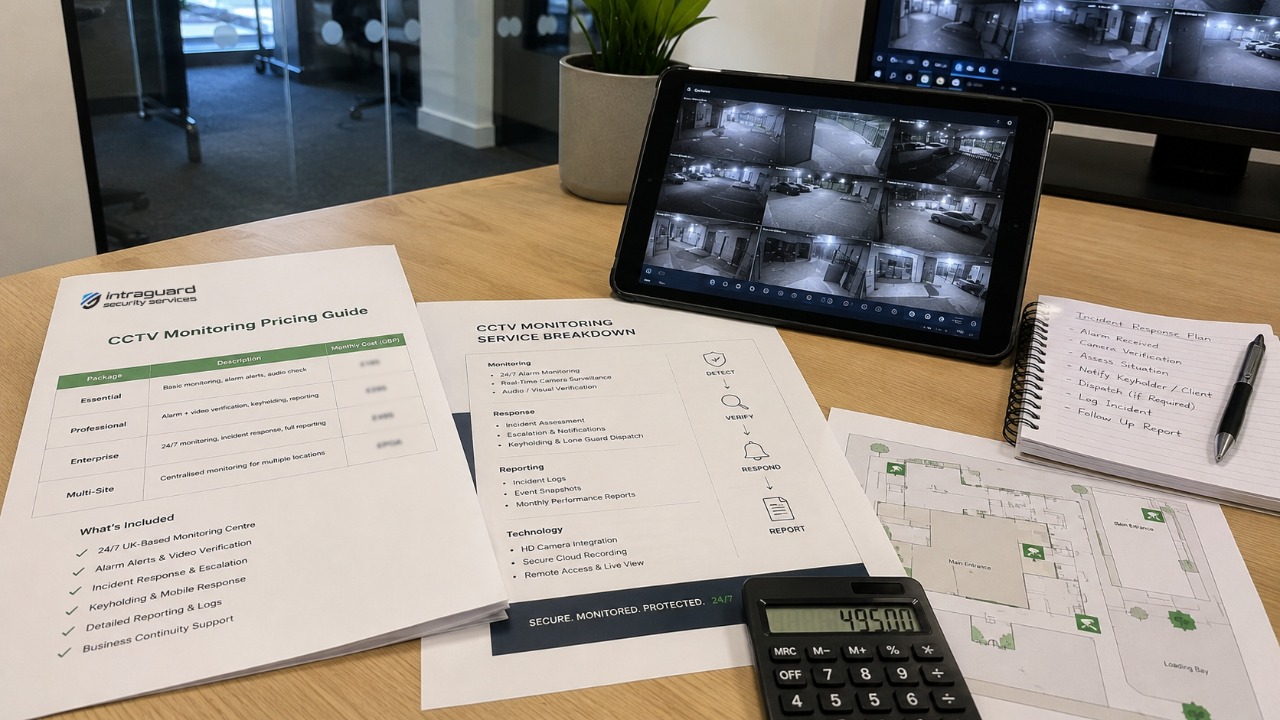
CCTV Monitoring Costs UK 2026: Is It Worth the Price for Businesses?
CCTV monitoring is worth the price when it changes the outcome of an incident. Recording-only CCTV may give your business evidence the next morning.
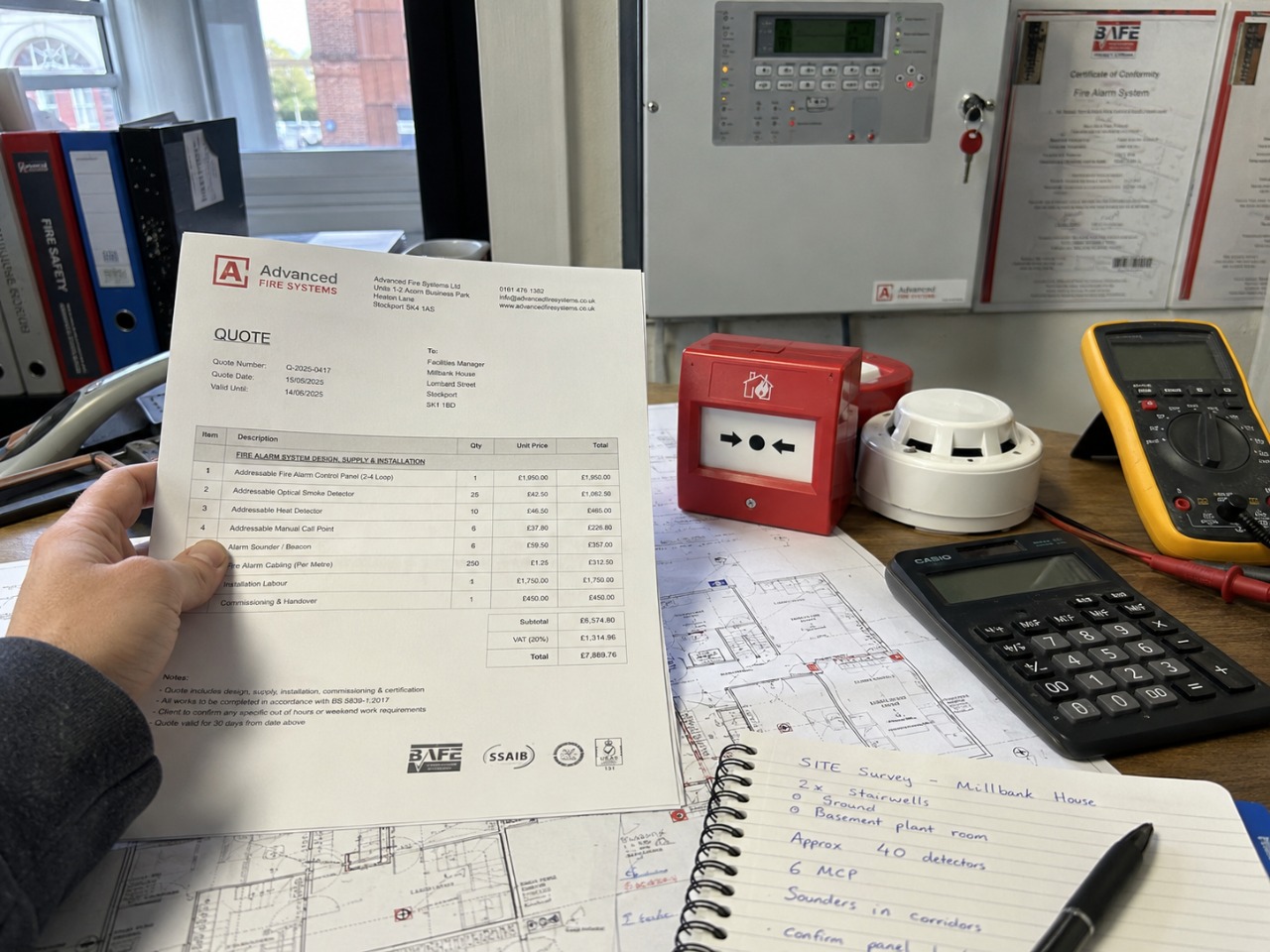
Fire alarm installation prices in the UK can vary from a low-thousands commercial setup to a significantly higher quote for a warehouse, school, care setting, HMO, construction site, multi-zone office or high-risk premises. The final price depends on your building layout, fire risk, system type, number of devices, access requirements, commissioning needs, monitoring requirements and long-term maintenance plan.
The important point is simple: a commercial fire alarm quote is not just the cost of detectors and a control panel. A proper quote should consider survey, design, equipment, cabling, installation, testing, commissioning records, handover documents and support after installation.
Small commercial fire alarm installation often starts from about £1,500 to £3,500, while larger or multi-zone commercial sites can rise to £8,000 to £25,000 or more. For early budgeting, some UK cost guides also use a per-square-metre estimate, but the final quote should always be based on a site survey, fire risk assessment, building use, and required system scope.
Use these figures as planning ranges only. They are not fixed prices and they should not replace a site-specific quote
Commercial fire alarm installation type | Typical UK guide price | Best suited for |
Small commercial premises | £1,500 to £3,500 | Small shops, offices, salons, clinics and simple commercial layouts |
Medium commercial premises | £4,000 to £7,500 | Offices, retail units, shared workplaces and buildings with several zones |
Large commercial or warehouse site | £8,000 to £25,000+ | Warehouses, logistics sites, schools, care settings and complex buildings |
Commercial fire alarm guide price | Around £18 to £27 per square metre | Early budgeting only before a detailed survey |
Manual call point | Around £100 to £200 each | Commercial escape routes and key circulation points |
Magnetic door release | Around £175 to £250 each | Fire doors and areas linked with access control |
Source note: Checkatrade lists commercial fire alarm installation at around £18 to £27 per square metre, with an average of £22.50 per square metre. Treat this as an early budgeting guide, not a final commercial quote.
Need a commercial quote based on your actual building, risk level and response needs? Request a Quote from Intraguard so the scope can be reviewed properly before installation.
Two buildings with the same floor area can need very different systems. A 500 square metre open-plan warehouse will not be priced in the same way as a 500 square metre clinic, care setting, school or office split into many rooms. Floor area matters, but layout and risk often matter more.
Building size, number of floors and total zones
Layout complexity, including rooms, corridors, stairwells, basements and plant areas
Fire risk level and occupancy type
Number of detectors, sounders, call points and visual alarm devices
Conventional, addressable, wireless or monitored system requirements
Access difficulty, ceiling height and working restrictions
Cabling route, containment and making-good requirements
Out-of-hours or weekend installation needs
Commissioning, handover records and user guidance
Maintenance, callout terms and monitoring requirements
Whether the system needs to link with access control, fire doors or wider site security
Different commercial premises need different levels of detection, warning, response planning and documentation. This is why a single headline price can be misleading.
Business or property type | Typical quote level | Why the price changes |
Small retail shop | Lower to medium | Simple layout, but stockrooms, staff areas and escape routes may add devices |
Office building | Medium | Meeting rooms, kitchens, plant areas, stairwells and shared spaces can increase coverage |
Warehouse or logistics site | Medium to high | High ceilings, racking, loading bays, noisy areas and large zones can increase cost |
HMO or care setting | Medium to high | Sleeping occupants, vulnerable people, escape routes and management duties can increase scope |
Construction site | Variable | Temporary layout, changing risks, cabins, hot works and fuel storage can change requirements |
Vacant property | Variable | Monitoring, inspection, key holding and response planning may be needed |
School or public building | Higher | Occupancy levels, evacuation planning and wider coverage can increase device count |
Multi-site business | Bespoke | Consistency, reporting, maintenance planning and staged rollout can affect the quote |
System type has a direct impact on the installation quote. The cheapest option is not always the right option for a commercial premises.
System type | Usually cheaper upfront? | Best suited for | Price impact |
Conventional fire alarm system | Yes | Small shops, small offices and simple layouts | Lower upfront cost, but less precise location detail |
Addressable fire alarm system | No | Warehouses, schools, larger offices and complex buildings | Higher cost, but clearer device and fault location detail |
Wireless fire alarm system | Sometimes | Occupied sites, listed buildings, temporary layouts and difficult cabling routes | Can reduce disruption, but device costs may be higher |
Monitored fire alarm system | Additional ongoing cost | Vacant, high-risk or out-of-hours premises | Adds monitoring costs and supports response planning |
A small office may be suitable for a simpler system. A warehouse, school, healthcare setting, HMO or multi-zone building may need more detailed detection and clearer activation location information. The system should be scoped around the building, risk assessment, occupancy and evacuation plan, not price alone.
Two quotes can look similar on price but include very different levels of work. Before choosing an installer, check the quote line by line.
Quote item | A weak quote may miss | A stronger quote should include |
Site survey | A quick visual check only | A proper review of building layout, access and risk factors |
System design | A generic device count | A layout-specific plan for detectors, sounders, call points and zones |
Equipment | Lowest-cost parts only | Commercial-grade equipment suitable for the site |
Cabling and containment | Basic wiring assumptions | Clear allowance for cabling, routes, containment and access |
Access equipment | Not included | Allowance for ladders, towers, lifts or high-ceiling access where needed |
Installation labour | Unclear scope | Clear labour allowance, including phasing and out-of-hours work if required |
Testing and commissioning | Unclear or excluded | Full testing, commissioning records and handover documents |
User handover | Not mentioned | Basic user guidance for testing, fault reporting and routine checks |
Maintenance | Not included | Servicing and fault support options shown separately |
Monitoring | Ignored | Optional monitoring discussion if the site needs out-of-hours response planning |
Exclusions | Hidden in small print | A clear list of what is and is not included |
Many price increases happen when the first quote is based on a rough device count instead of a proper site review. The following items should be clarified before work starts.
High ceiling access equipment
Weekend or out-of-hours installation
Remedial wiring or difficult cable routes
Additional containment or trunking
Making good after cabling
Extra detectors added after survey
Door release or access control integration
Temporary site changes on construction or refurbishment projects
Monitoring connection and ongoing monitoring fees
Maintenance callout terms and replacement parts
This is why the cheapest quote is not always the safest commercial decision. A low upfront price can become expensive if essential survey, access, commissioning, maintenance or documentation work is added later.
For business and other non-domestic premises, GOV.UK says fire safety responsibility can sit with an employer, owner, landlord, occupier or anyone else with control of the premises, such as a facilities manager, building manager or managing agent. The responsible person must carry out and regularly review a fire risk assessment, maintain suitable fire safety measures, plan for an emergency and provide staff information, instruction and training.
This guide is not legal advice. Businesses should check official guidance, use competent support where needed and make sure the fire alarm system matches the premises, risk assessment, occupancy and evacuation plan.
Fire alarm installation is not only a one-off project. Poor detector choice, weak location planning, unclear testing routines and delayed fault investigation can all create avoidable disruption for a business.
To reduce avoidable false alarms and ongoing disruption, businesses should focus on correct detector choice, suitable detector location, planned maintenance, staff testing procedures, commissioning records and fast fault investigation.
Maintenance costs depend on system size, device count, site risk, callout terms and whether monitoring is included. When comparing quotes, ask how often the system will be serviced, what callouts cost, what parts are excluded and how faults will be handled.
Routine maintenance visits
Regular user testing by the business
Fault investigation
Emergency callouts
Replacement parts and batteries
Monitoring fees if required
Updates after layout, occupancy or risk changes
To get a useful quote, share your site type, floor plans, opening hours, occupancy levels, high-risk areas, existing alarm setup, access restrictions, monitoring needs and future expansion plans before the survey.
Intraguard can scope commercial fire alarm installation alongside wider security planning where needed. For security systems work, Intraguard uses CTC-cleared installers and can connect the project with monitoring, key holding, alarm response, mobile patrols, CCTV, access control and vacant property inspection where those services are relevant to the site.
Do not compare fire alarm quotes by the final price alone. A better quote should make it clear what is included, what is excluded and how the system will be supported after installation.
Is the site survey included?
Is the system design clearly explained?
Are detectors, sounders, call points, panels and interfaces listed?
Is cabling, containment and access equipment included?
Is installation labour included, including out-of-hours work if required?
Will testing, commissioning records and handover documents be provided?
Will staff receive basic user guidance?
Is ongoing maintenance offered and priced clearly?
Is monitoring available if the site needs response planning?
Are exclusions listed in writing?
Need a commercial fire alarm installation quote? Speak with Intraguard for a site review and a quote based on your building, risk level and response needs.
Fire alarm installation prices in the UK vary because every building has different risks, layouts, access needs, occupancy patterns and response plans. A small shop may need a simpler setup, while a warehouse, office, care setting, construction site, vacant property or multi-zone building may need a more detailed system.
The best quote is not always the cheapest. It is the quote that clearly explains the system, includes the right installation scope, covers testing and handover records, sets out exclusions and supports long-term maintenance planning.
Request a Quote from Intraguard for commercial fire alarm installation support linked with wider security planning where needed.
Commercial fire alarm installation often starts from about £1,500 to £3,500 for smaller premises and can rise to £8,000 to £25,000 or more for larger, high-risk or multi-zone sites. The final quote should be based on a site survey and risk-led scope.
The main factors are building size, layout, fire risk, system type, device count, cabling, access difficulty, commissioning, monitoring and maintenance requirements.
Yes. Commercial premises often need a designed system with zones, detectors, call points, sounders, cabling, testing, commissioning records, handover documents and maintenance planning.
For larger or more complex premises, an addressable system can be worth the extra cost because it helps identify the exact device or area of activation and supports clearer fault investigation.
A strong quote should include survey, design, equipment, cabling, access allowances, installation labour, testing, commissioning records, handover documents, user guidance and optional maintenance or monitoring.
Yes, monitoring can be discussed where the site needs out-of-hours response planning, vacant property support or a connected security setup. It should be shown clearly as an installation or ongoing cost.
GOV.UK fire safety in the workplace guidance - used for responsible person and non-domestic premises guidance.
Checkatrade fire alarm installation cost guide - used as a market reference for early budgeting ranges only.
CCTV monitoring is worth the price when it changes the outcome of an incident. Recording-only CCTV may give your business evidence the next morning.
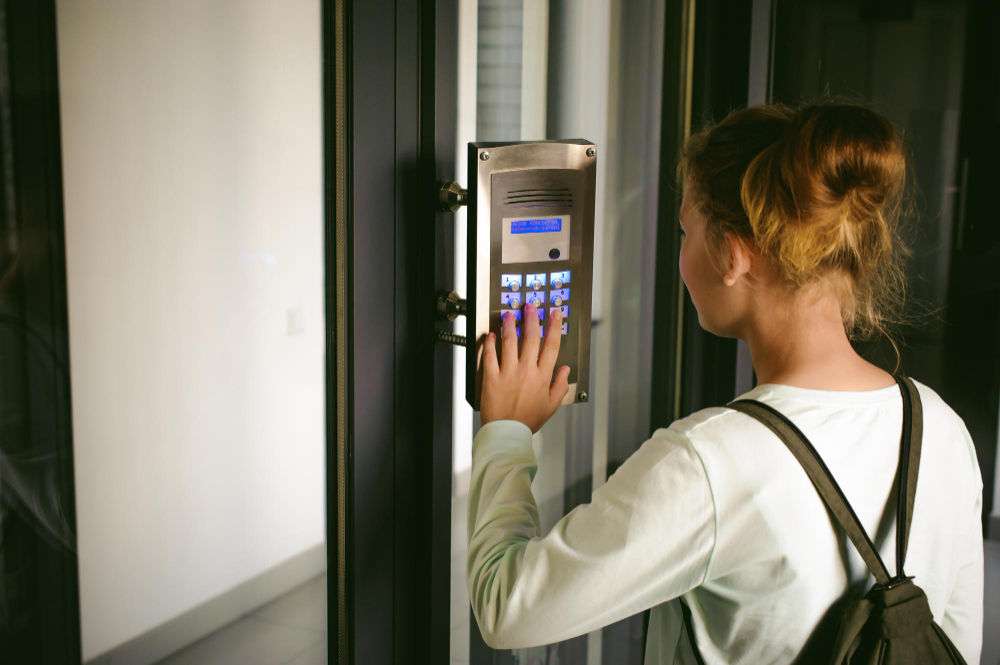
Access control systems prevent unauthorised entry by checking a person’s credentials before allowing access. These credentials may include a key card, fob, PIN, mobile credential, biometric scan, or visitor approval.

The UK terror threat level is a national assessment of how likely a terrorist attack is. It does not predict a specific place, time, or target. It gives businesses a warning level so they can prepare properly.

A small refurbishment site may only need patrols or CCTV monitoring. In contrast, a busy London construction project with tools, plant machinery, fuel, scaffolding and materials may need manned guarding or 24/7 cover.

For UK businesses, the key questions are simple: does Martyn’s Law apply, which tier are you in, what procedures do you need, and how do security measures like CCTV, access control, guards, lockdown plans, and evacuation routes fit in?

To put it simply, workforce management systems are digital tools that help businesses plan, schedule, track, and optimise their workforce. Instead of managing people manually, these systems automate key tasks like scheduling, attendance, and workforc