
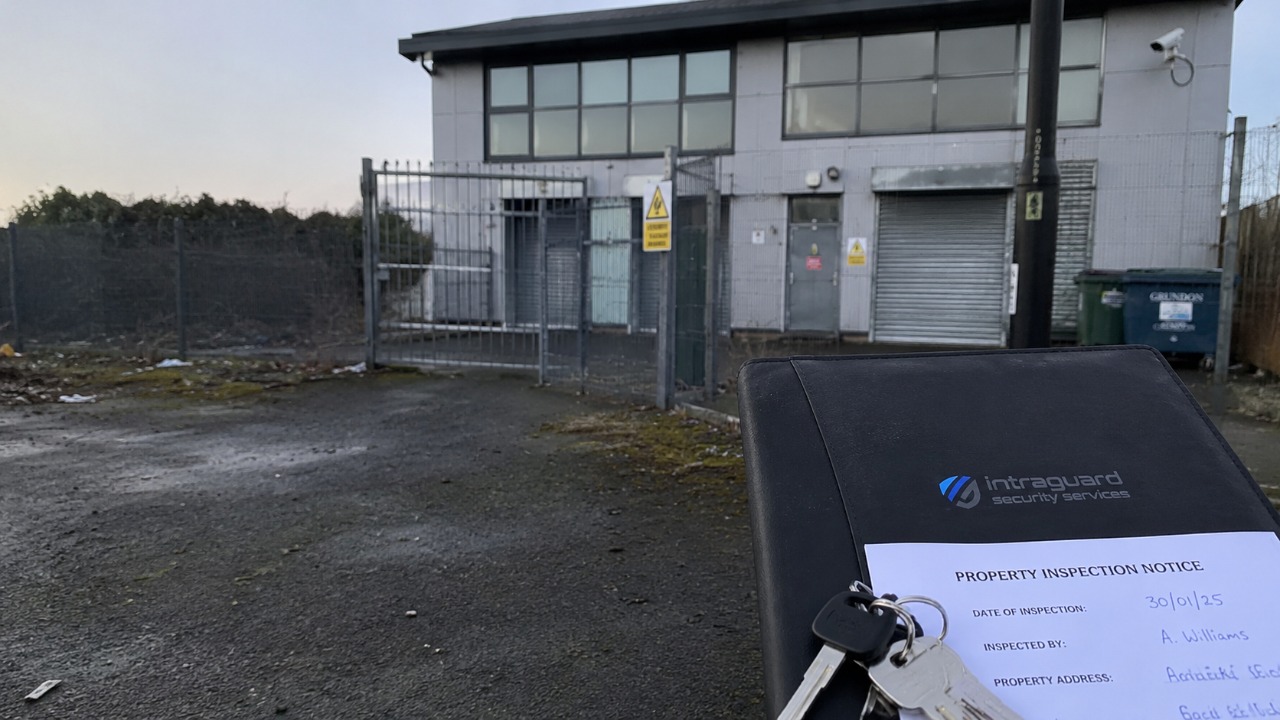
Vacant Property Management: A Complete Guide to Inspections, Risks and Protection
Vacant property management is the coordinated inspection, security, access control, maintenance escalation and reporting used to protect an unoccupied building.
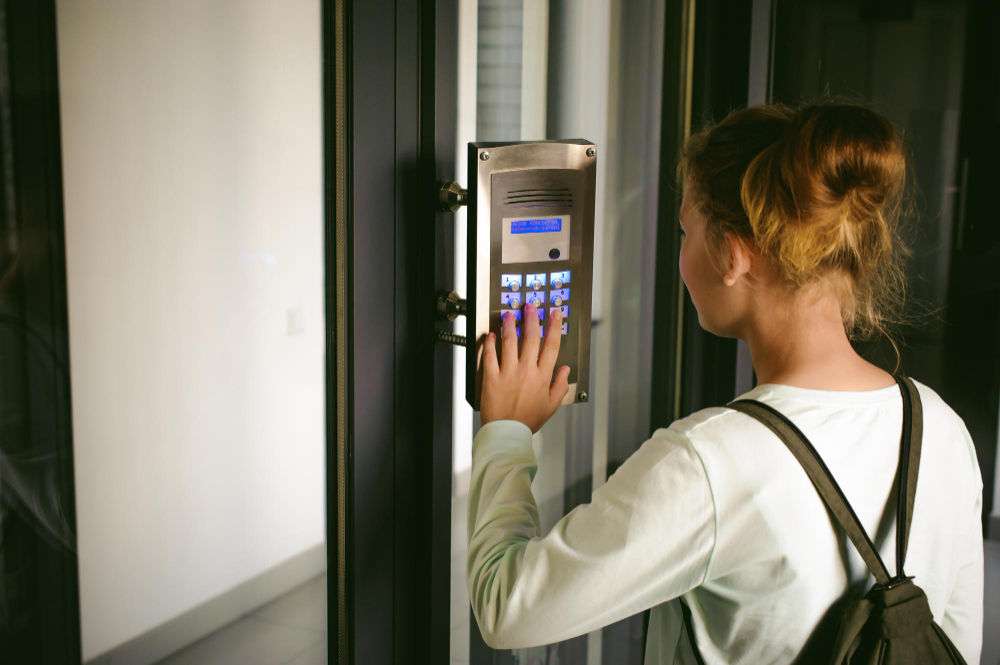
One shared fob. One employee who left three months ago but still has building access. One delivery driver who's wandered past reception unchallenged.
That's all it takes for unauthorised entry to happen, and most UK businesses don't find out until something's already gone missing or someone's already been hurt.
Access control systems close that gap by checking every person's credentials before a door opens, giving you a clear answer to a question most businesses can't currently answer: who is in your building right now, and should they be?
Access control systems prevent unauthorised entry by checking a person’s credentials before allowing access. These credentials may include a key card, fob, PIN, mobile credential, biometric scan, or visitor approval.
A good access control system helps a business control:
Who can enter
Which areas they can access
What time access is allowed
How long visitor access lasts
When access should be removed
Which doors or areas are high risk
What happens if there is a security incident
That is why access control solutions are now a core part of modern business security systems.
For businesses with multiple doors, visitors, staff entrances, loading bays, or restricted areas, access control should be planned around the full site, not just one entrance. Intraguard can help UK businesses review access risks and build a joined up security plan using access control, CCTV, alarms, monitoring, guarding, and patrol support.
An access control system is a security technology that restricts entry to a building, room, or area to only those with approved credentials, such as a key card, fob, PIN, mobile pass, or biometric scan.
Role based access control is a method of granting entry permissions based on a person's job role, so employees only have access to the doors, floors, or systems relevant to their responsibilities.
Unauthorised entry happens when someone enters a building, room, gate, staff only area, or restricted zone without the correct permission. This can happen when access checks are weak, credentials are misused, staff hold doors open, access rights are not updated, or older systems fail to control movement properly.
In simple terms, unauthorised entry can happen when:
A visitor walks beyond reception without approval
A former employee still has active access
A staff member shares a fob, card, or PIN
Someone tailgates through a controlled door
A contractor enters areas outside their work zone
A side door, gate, or loading bay is left unsecured
Access permissions are not reviewed after role changes
Most modern access control systems are designed around two key questions: who is allowed to enter, and when are they allowed to enter? That means access can be controlled by person, role, department, location, door, time, or visitor status.
For a business, this matters because unauthorised entry can lead to:
Theft of stock, tools, equipment, or property
Staff safety concerns
Visitor safety risks
Data exposure or confidential information breaches
Damage to restricted areas
Operational disruption
Reputational harm
Higher security and insurance concerns
UK businesses are operating in a more demanding security environment. Retailers, offices, warehouses, construction sites, schools, healthcare facilities, managed buildings, and industrial premises all face different access risks.
The Association of Convenience Stores’ 2026 Crime Report recorded 5.8 million incidents of shop theft and just over 950,000 incidents of verbal abuse across the convenience sector. While this data focuses on retail, the wider lesson applies to many business premises: uncontrolled access creates opportunity.
A weak entry process can affect:
Staff safety
Visitor safety
Stock protection
Equipment security
Confidential records
Server rooms
Cash offices
Loading bays
Restricted areas
Contractor movement
Out of hours control
Access control systems UK businesses choose should match the real risks of the site, not just the front door.
Most access breaches are not caused by one big failure. They usually happen because of small gaps that build up over time.
Human error is one of the most common causes of physical security breaches. Staff may forget to lock a door, assign the wrong access level, fail to remove old permissions, or allow someone through because they look familiar.
This is why access control should not rely only on people remembering every rule. The system should make safe behaviour easier.
Traditional keys are difficult to control once they leave the business. Fobs and cards are better, but they still create risk if they are lost, shared, or not cancelled quickly.
Shared PIN codes are also a problem. If several people use the same code, the business cannot clearly prove who entered.
A strong access control system should give each user their own credential and make it easy to remove access when needed.
Former employees, old contractors, temporary workers, and agency staff should not keep access after their role ends.
This is a serious risk for businesses with high staff turnover, shift work, multiple sites, or frequent contractor visits. If access is not reviewed regularly, the business may have people on the system who no longer need entry.
Tailgating happens when someone follows an authorised person through a door without using their own credential. It is one of the simplest ways to bypass security access control.
Honeywell identifies tailgating and social engineering as common methods of gaining unauthorised access, often because people use politeness or social pressure to get through a controlled entry point.
This is why staff training still matters. Technology controls the door, but people help protect the process.
Older door access control systems may lack modern encryption, proper reporting, remote management, reliable audit logs, or integration with CCTV and alarms.
Outdated systems can also create a false sense of security. The building may look protected, but the business may not have clear visibility over who entered, when they entered, or whether their access should still be active.
Access control systems work by checking a credential against a permission rule. If the person has the correct permission, the system unlocks the door or grants entry. If they do not, access is denied.
The system can control access by:
Person
Role
Department
Door
Floor
Room
Site
Time of day
Day of week
Visitor type
Contractor status
For example, a warehouse manager may have access to the loading bay, stock area, office, and alarm panel. A delivery driver may only have temporary access to the goods in area. A cleaner may only have access after closing time. A visitor may only enter reception and meeting rooms.
That is the value of security access control. It gives businesses control based on real operational need.
Access logs help businesses see who entered, when they entered, and which areas were accessed. This is useful after a security incident, but it also supports everyday accountability.
If a fob is shared, a PIN is reused, or former staff access is not removed, the business loses visibility. That is why modern access control systems should give each user a unique credential and keep clear records of access activity.
Costs vary depending on the number of doors, the type of credential (fob, card, biometric, mobile), and whether the system is standalone or cloud based and networked.
As a general guide:
Single door keypad or fob system: typically the lowest cost entry point, suited to small offices or single entrances
Multi door networked systems: cost scales with door count, wiring, and controller hardware
Cloud based, multi site systems: higher upfront cost but lower long term management overhead, since permissions are updated remotely rather than requiring an engineer visit
Biometric readers: typically the most expensive per door, reflecting the higher security level
Ongoing costs to budget for include software licensing (for cloud based systems), maintenance visits, and credential replacement. Most UK installers, including Intraguard, offer a free site survey to provide an accurate quote based on your specific door count and risk level.
Different sites need different access control solutions. The right choice depends on site layout, staff numbers, visitor volume, risk level, budget, and how the business operates.
Access Control Solution | Best For | Main Benefit |
Key card access control | Offices, shared buildings, staff areas | Easy to issue, track, and cancel |
Fob access control | Warehouses, retail, offices, residential blocks | Practical and simple for daily users |
PIN entry system | Lower risk internal areas | No physical card required |
Mobile access control | Modern offices and hybrid teams | Access through smartphones |
Biometric access control | High security rooms and sensitive areas | Strong identity verification |
Cloud based access control | Multi site businesses | Remote management and faster updates |
Door access control systems | Main entrances, staff doors, restricted rooms | Controls entry at specific points |
Visitor management system | Offices, schools, healthcare, corporate sites | Tracks guests, contractors, and temporary visitors |
CCTV integrated access control | Higher risk commercial premises | Links entry activity with visual evidence |
The best access control system is the one that fits the way the business actually moves people through the site.
Business Type | Common Access Risk | Recommended Control |
Offices | Visitors moving beyond reception | Visitor management and key card access |
Warehouses | Uncontrolled loading bay access | Fob access, CCTV, patrols, and gate control |
Retail stores | Staff only areas and stockroom access | Door access control and CCTV integration |
Schools | Visitor and contractor movement | Visitor sign in, badges, and restricted access |
Healthcare sites | Sensitive records and staff only zones | Role based access and audit logs |
Multi site businesses | Inconsistent access rules | Cloud based access control |
A visitor management system controls temporary access for guests, contractors, delivery drivers, maintenance workers, clients, interview candidates, and other non staff visitors.
This is important because many businesses secure staff access but leave visitor movement too loose.
Manual visitor books can be unreliable. Names may be unreadable. Visitors may forget to sign out. Reception teams may be too busy to monitor every person. Sensitive visitor information may also be left visible to others.
Visitor management systems help businesses improve:
Digital sign in
Visitor badges
Contractor check ins
Host notifications
Sign out records
Time limited access
Emergency roll call support
Restricted area control
For stronger protection, visitor management systems should work alongside access control systems. Visitors should be recorded, approved, guided, and limited to the areas they actually need.
Access control is strongest when it is part of a wider physical security plan. Honeywell lists access control systems, surveillance cameras, barriers, physical locking mechanisms, security guards, patrols, and intrusion detection systems as common countermeasures used to prevent unauthorised access.
For UK businesses, that usually means combining technology with people and procedures.
CCTV helps verify access events. If someone enters a restricted area, video footage can show who it was and what happened.
Access logs tell you a credential was used. CCTV helps confirm the person using it.
Security officers can challenge unknown visitors, monitor entrances, support reception, check access points, and respond when something looks wrong.
This is especially useful in busy commercial buildings, retail premises, warehouses, events, vacant properties, and out of hours sites.
Intruder alarms support access control by detecting forced entry, tampering, movement, or activity outside approved hours.
When connected with monitoring and response services, alarms help turn a security signal into action.
Physical barriers still matter. Gates, locks, turnstiles, controlled doors, fences, and secure internal doors help reduce easy access.
Technology should not replace basic physical protection. It should strengthen it.
Hybrid work has made access control more complicated.
Staff may not come in every day. Contractors may work across different locations. Managers may need remote access reporting. Multi site businesses may need consistent security rules across offices, warehouses, branches, and managed buildings.
In this environment, cloud based access control systems can be useful because permissions can be managed remotely. Access can be updated quickly, temporary credentials can be issued, and different sites can be monitored from one system.
For hybrid workplaces, businesses should consider:
Pre approved access days
Time limited staff access
Contractor access windows
Remote access changes
Multi site reporting
Visitor pre registration
Regular permission reviews
The goal is not to make entry difficult. The goal is to make entry controlled.
Access control systems work best when the business has clear rules around them.
Check who has access, what areas they can enter, and whether that access is still needed.
This should include staff, contractors, managers, cleaners, temporary workers, and external service providers.
When an employee, contractor, or temporary worker leaves, their access should be removed quickly.
This should be part of the offboarding process, not something remembered later.
Staff should understand that holding a door open for an unknown person can create a security breach.
Training should be practical, polite, and clear. Employees need to know how to report suspicious access attempts without putting themselves at risk.
If a badge or fob is lost, it should not make it easy for someone to identify where it can be used.
Avoid putting unnecessary site details, sensitive information, or obvious location clues on credentials.
Access control should not operate in isolation.
When door access control systems work with CCTV, alarms, monitoring, guarding, and patrols, the business gets a stronger and faster response to security concerns.
Access control installation should start with a review of the building layout, entry points, staff movement, visitor flow, and restricted areas. The system should be designed around real site risks, not just where it is easiest to install a reader or keypad.
A professional access control installation should also check door hardware, power supply, emergency exit requirements, CCTV coverage, alarm integration, and how access permissions will be managed after installation. This helps avoid a system that works technically but fails operationally.
Many businesses treat access control as a door product. That is the wrong mindset.
Access control is a risk management process.
The biggest mistakes are:
Only securing the main entrance
Ignoring side doors and loading bays
Using shared PINs
Keeping old staff access active
Giving too many people full access
Not reviewing visitor movement
Failing to train staff on tailgating
Not linking access control with CCTV or alarms
Choosing a system without thinking about future growth
A business does not need the most complicated system. It needs the right system, installed around the way the site actually works.
Use this checklist to review your current risk.
Question | Why It Matters |
Do you know who entered your site today? | Access logs create accountability |
Can former staff still enter? | Old permissions create hidden risk |
Are shared codes being used? | Shared access weakens accountability |
Are visitors signed in and signed out properly? | Visitor tracking improves site control |
Are side doors and staff entrances controlled? | Weak access points are often targeted |
Can contractors access areas they should not enter? | Temporary access needs clear limits |
Is access removed quickly after someone leaves? | Offboarding should include security |
Does CCTV cover key entry points? | Video helps verify incidents |
Are access permissions reviewed regularly? | Risk changes as the business changes |
Is the system linked to wider security response? | Alerts need action, not just records |
If several answers are unclear, the business likely has an access control gap.
The right access control system depends on the size of your site, the number of users, the level of risk, and how people move through the premises. A small office may only need fob or key card access at the main entrance, while a warehouse may need controlled staff doors, loading bay access, CCTV integration, visitor tracking, and out of hours monitoring.
Before choosing a system, businesses should review:
Number of entry and exit points
Staff, visitor, and contractor movement
Restricted rooms or high risk areas
Out of hours access needs
CCTV and alarm integration
Multi site access requirements
How quickly access can be removed
A site survey is often the best way to identify the right setup because weak access points are not always obvious from the front door.
Access control systems help businesses stop unauthorised entry by controlling who can enter, where they can go, and when access is allowed. For UK businesses, this is one of the most practical ways to protect staff, manage visitors, secure restricted areas, and reduce avoidable risk.
If your business still relies on shared keys, old codes, manual visitor logs, uncontrolled side doors, or unclear contractor access, the risk is already present.
A strong access control system gives your business visibility, accountability, and confidence. When combined with visitor management systems, CCTV, alarms, guarding, monitoring, and professional security support, it becomes part of a stronger protection strategy.
Not sure where your access gaps are? Intraguard can review your entry points, visitor flow, staff access, CCTV coverage, and out of hours risks to help build a stronger access control plan.
Access control systems are security systems that manage who can enter a building, room, gate, or restricted area. They use credentials such as cards, fobs, PINs, mobile access, biometrics, or visitor approval.
Access control systems stop unauthorised entry by allowing only approved users to access specific areas. They can also track entry activity, restrict access by time or role, and remove permissions when access is no longer needed.
The best access control system depends on the site. Common options include fob access, key card access, mobile credentials, biometric access, cloud based access control, door entry systems, and visitor management systems.
Access control manages physical entry into buildings or restricted areas. A visitor management system records and controls temporary visitors, contractors, deliveries, and guests. The strongest setup often uses both.
Many UK businesses benefit from door access control systems, especially if they manage staff entrances, visitors, stockrooms, offices, warehouses, restricted areas, contractors, or out of hours access.
Vacant property management is the coordinated inspection, security, access control, maintenance escalation and reporting used to protect an unoccupied building.
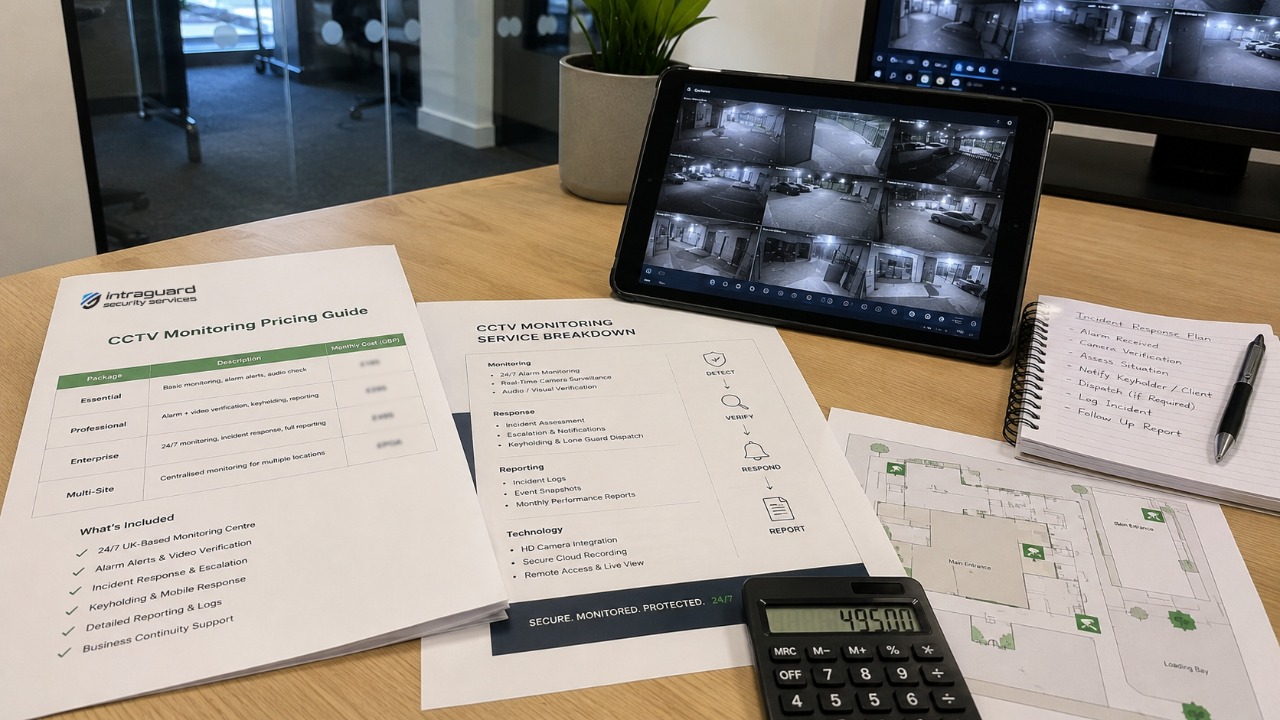
CCTV monitoring is worth the price when it changes the outcome of an incident. Recording only CCTV may give your business evidence the next morning.
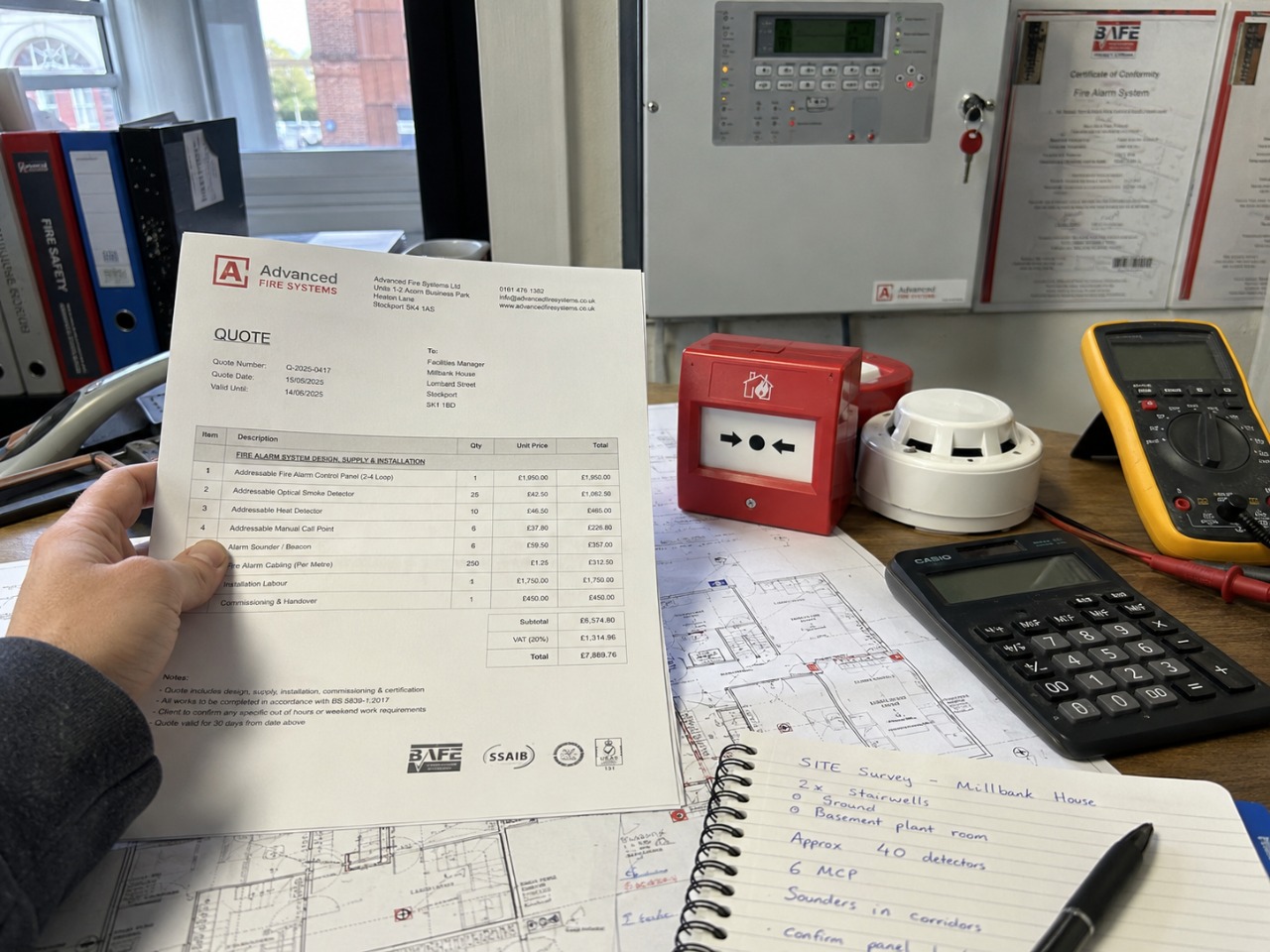
Fire alarm installation prices UK guide for commercial premises. See typical costs, quote factors, hidden fees and what to check before choosing an installer.

The UK terror threat level is a national assessment of how likely a terrorist attack is. It does not predict a specific place, time, or target. It gives businesses a warning level so they can prepare properly.

A small refurbishment site may only need patrols or CCTV monitoring. In contrast, a busy London construction project with tools, plant machinery, fuel, scaffolding and materials may need manned guarding or 24/7 cover.

For UK businesses, the key questions are simple: does Martyn’s Law apply, which tier are you in, what procedures do you need, and how do security measures like CCTV, access control, guards, lockdown plans, and evacuation routes fit in?