
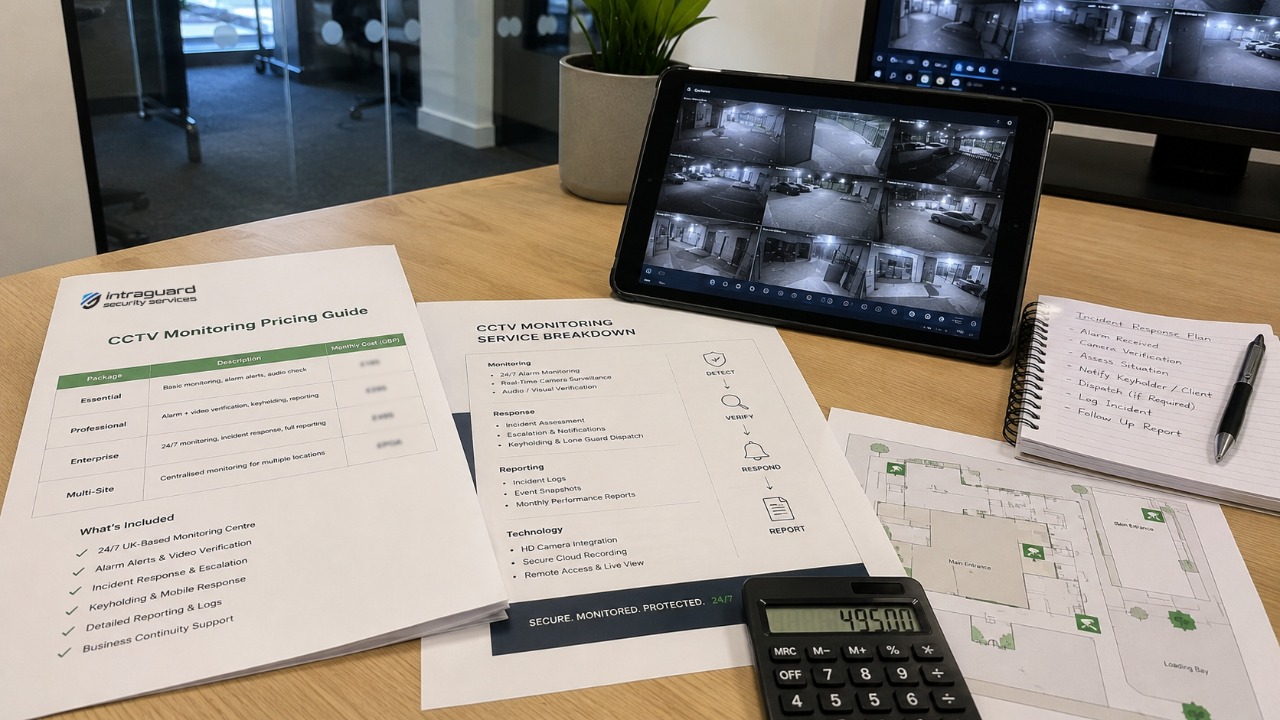
CCTV Monitoring Costs UK 2026: Is It Worth the Price for Businesses?
CCTV monitoring is worth the price when it changes the outcome of an incident. Recording-only CCTV may give your business evidence the next morning.

Leaving a building unoccupied might make you think “it’s safe because nobody’s there,” but unfortunately, that thinking doesn’t hold up. Empty properties are magnets for vandalism, squatters, theft, arson, and deterioration. When your property isn’t actively lived in or monitored, you’re leaving the door open for risk.
In fact, according to one recent survey, there were 676,304 vacant and long-term vacant properties in England as of early 2025, a rise of around 5% compared to the previous year.
And as one UK provider put it: “vacant properties are a criminal’s dream due to the lack of occupancy, providing them with the perfect opportunity.”
For property owners, developers, or landlords in London and across the UK, the goal isn’t just to lock the doors and hope for the best; it’s to proactively protect the asset until it’s back in full use.
The scale of the challenge is substantial. Consider these stats:
In London, especially with its higher property values, denser built environment, and complex access issues, the risks and costs are amplified.
Simply because when something goes wrong (vandalism, insurance claim, structural damage), the losses add up fast.
So what does “protecting” an empty property actually involve? It’s more than just a lock and an alarm. Here are the core security service categories that matter:
These solutions can be combined and tailored depending on the size, location, risk profile, and duration of vacancy.
Here’s a breakdown of common solutions with notes on when they make sense:
Solution | Best Use | Key Benefit |
Manned Guarding | High-value, large commercial sites or premium residential, especially in London | Presence = powerful deterrent + immediate response |
Mobile Patrols | Mid-risk, smaller sites vacant for moderate periods | Cost-efficient but still physical presence |
Remote Surveillance / CCTV | Sites with lower risk, or as a supplement | Constant monitoring with minimal staffing |
Keyholding & Alarm Response | Properties where full-time presence isn’t needed | On-demand response rather than full cover |
Perimeter & Access Control | Large development sites, commercial derelicts | Prevents unauthorised entry and access |
Smart Monitoring (pipes/maintenance) | Vacant residential or commercial property awaiting reuse | Early detection of damage, fire, vandalism |
When you choose the right mix, you can protect the asset while managing costs effectively.
Vacant properties don’t all stay unoccupied for the same length of time. Some might be empty for a few weeks (between tenants or for renovation), others for months or even years. Your contract type should reflect this.
Ideal when vacancy is predictable and short, e.g., between tenants or during refurbishment. Often higher cost per month because mobilisation and termination costs are higher, but flexibility is key.
Best for properties likely to stay empty for extended periods (e.g., awaiting redevelopment). You can negotiate better rates, include maintenance checks, and build in technology to reduce staffing.
In both cases, it’s crucial to agree upfront on scope, response times, inspection schedules, and what happens if an incident occurs.
To give you a sense of numbers, let’s talk cost. While each site varies based on risk, location, size, and services required, here are rough guide ranges (London region) to help you budget:
The Key Takeaway: cost is not just hours × rate; you also pay for risk mitigation, technology, response capability, and downtime avoidance.
If you think “I’ll skip security and just check occasionally,” beware. The risks (and potential costs) of leaving a property unsecured are significant:
In short, the cost of not implementing proper security far exceeds the cost of putting the right measures in place.
You don’t need a huge budget to secure a vacant property; smart planning and right-sized solutions work. Here are some tips:
When it comes to vacant property protection, you want a partner who gets it right. Let’s take a look at why Intraguard stands out:
In short, you get value + protection, not just “someone watching the building”.
Leaving a property empty doesn’t mean leaving it vulnerable. With smart planning, affordable technology, and trusted partners like Intraguard, you can protect your investment without unnecessary expense.
Whether it’s a London flat awaiting tenants or a nationwide commercial portfolio under redevelopment, the right security strategy saves money, reduces risk, and preserves peace of mind.
Empty doesn’t have to mean exposed, and with Intraguard watching over your assets, it never will.
Don’t stop here, check out our latest blogs packed with actionable insights.
Why Front of House Services Are the Heart of Safety and Success
Could Missing These Security Measures in 2025 Be Costing Your UK Retail Store Thousands?
It depends on risk and location. For low-risk sites, a visit every 7-14 days plus remote monitoring may suffice; for higher-risk sites (London inner zone, commercial), you might need daily checks or continuous monitoring.
Not quite. CCTV is a great piece of the puzzle, but without patrols, response, or maintenance, it’s only a bit of the solution. Monitoring, alarms, keyholding, and physical presence all contribute.
Generally, a property empty for more than 30–60 days (residential) or 90 days (commercial) is classed as a long-term vacancy by insurers. Many ask for special security provisions for such sites.
Emerging technologies like drones and AI-enabled cameras are being utilised, especially for large commercial sites.
But for standard residential or smaller commercial vacancies in London, traditional methods (guards + patrols + CCTV) remain the better option.
For multi-year vacancies: negotiate a longer-term contract with your security provider that phases in services (e.g., full patrols for the first few months, then shift to remote monitoring + periodic checks), maintain preventive inspections (roof, plumbing, utilities), and plan for site reactivation early (so the transition back to occupancy is smooth and less costly).
CCTV monitoring is worth the price when it changes the outcome of an incident. Recording-only CCTV may give your business evidence the next morning.
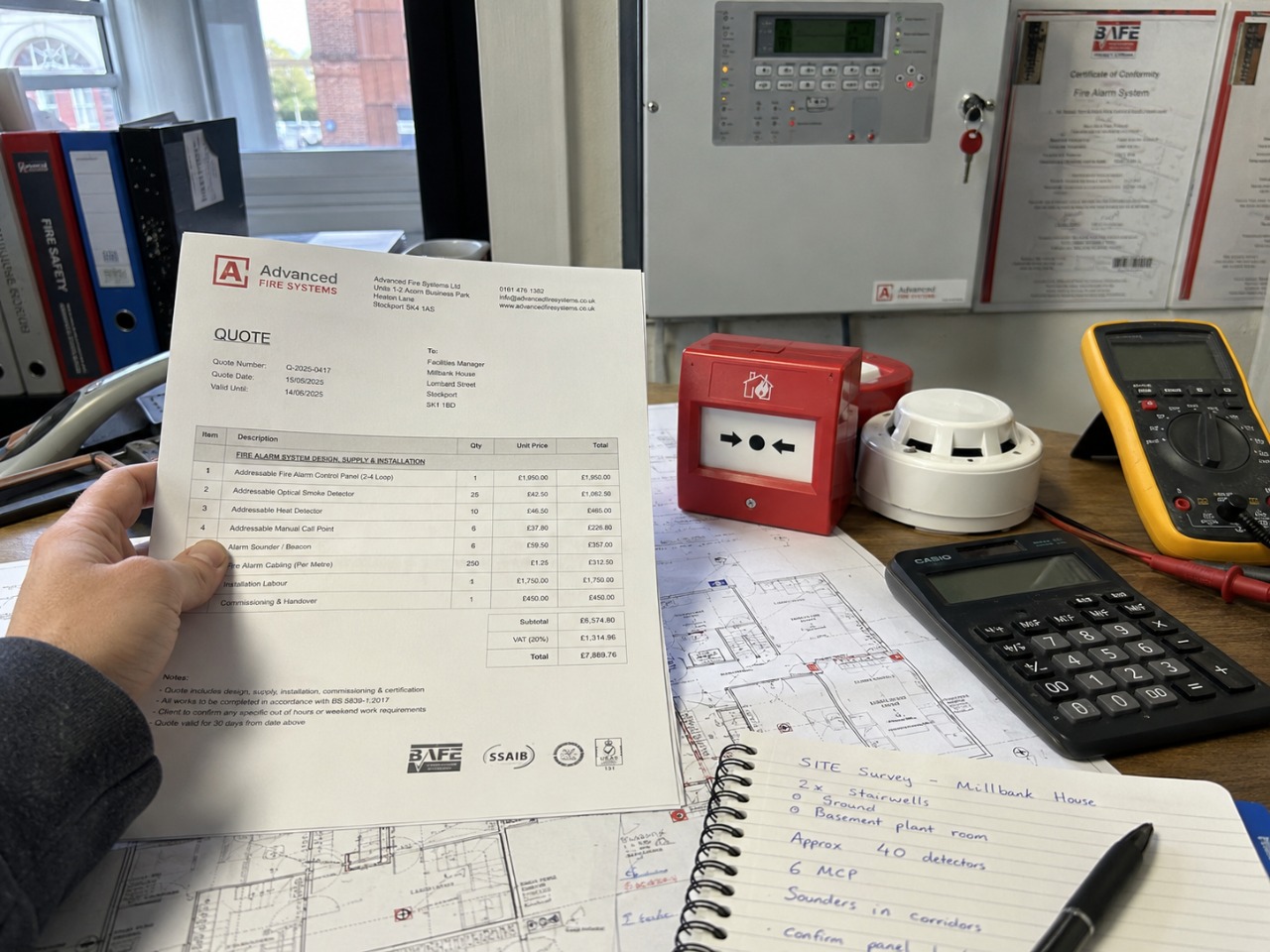
Fire alarm installation prices UK guide for commercial premises. See typical costs, quote factors, hidden fees and what to check before choosing an installer.
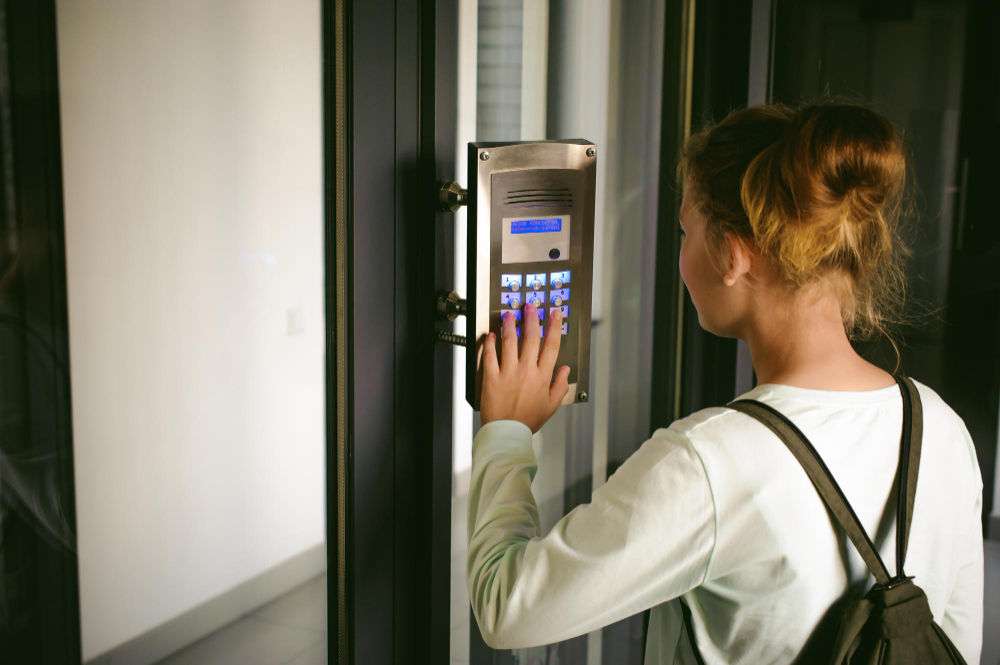
Access control systems prevent unauthorised entry by checking a person’s credentials before allowing access. These credentials may include a key card, fob, PIN, mobile credential, biometric scan, or visitor approval.

The UK terror threat level is a national assessment of how likely a terrorist attack is. It does not predict a specific place, time, or target. It gives businesses a warning level so they can prepare properly.

A small refurbishment site may only need patrols or CCTV monitoring. In contrast, a busy London construction project with tools, plant machinery, fuel, scaffolding and materials may need manned guarding or 24/7 cover.

For UK businesses, the key questions are simple: does Martyn’s Law apply, which tier are you in, what procedures do you need, and how do security measures like CCTV, access control, guards, lockdown plans, and evacuation routes fit in?